This is a work-in-progress...
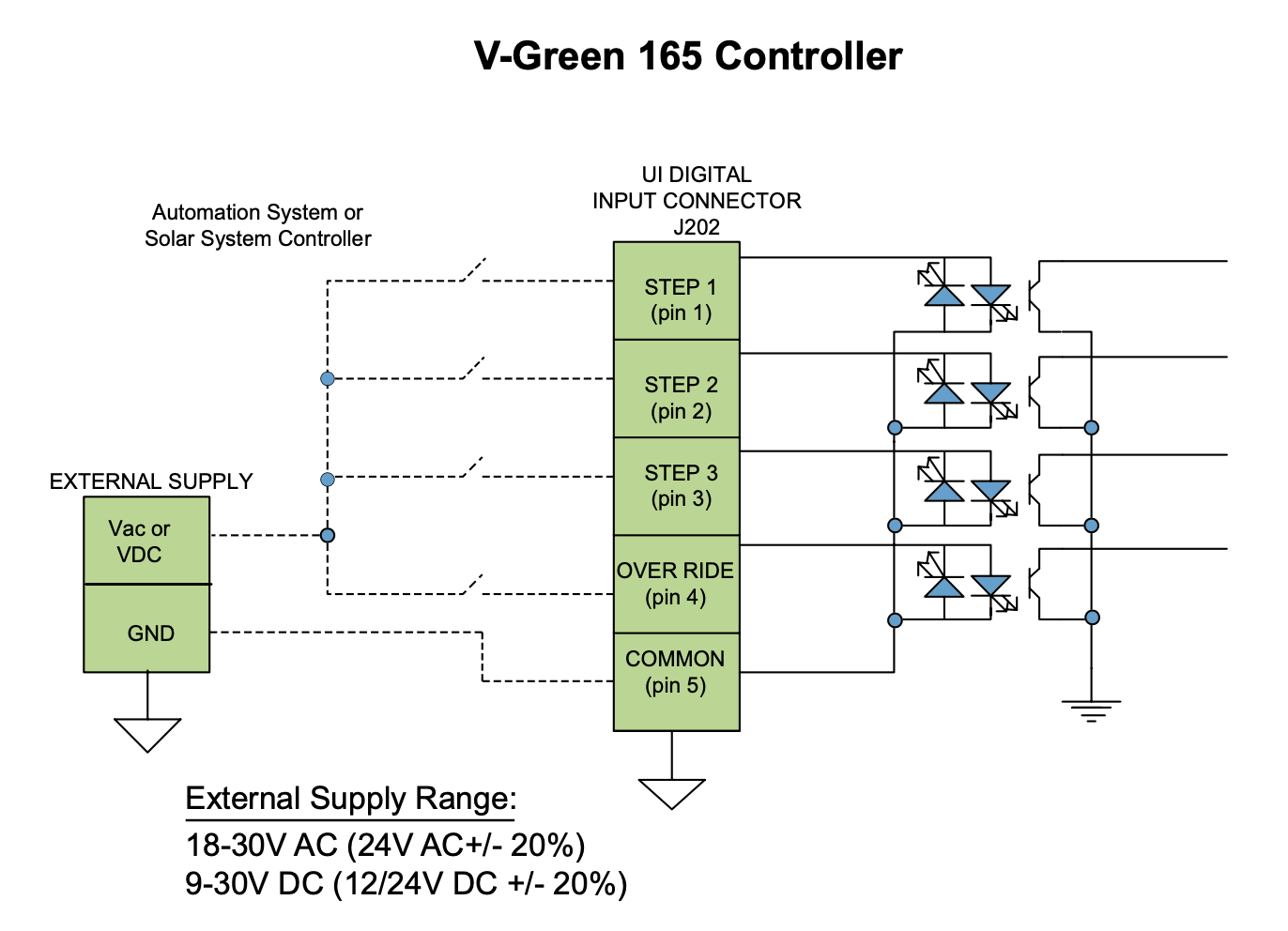
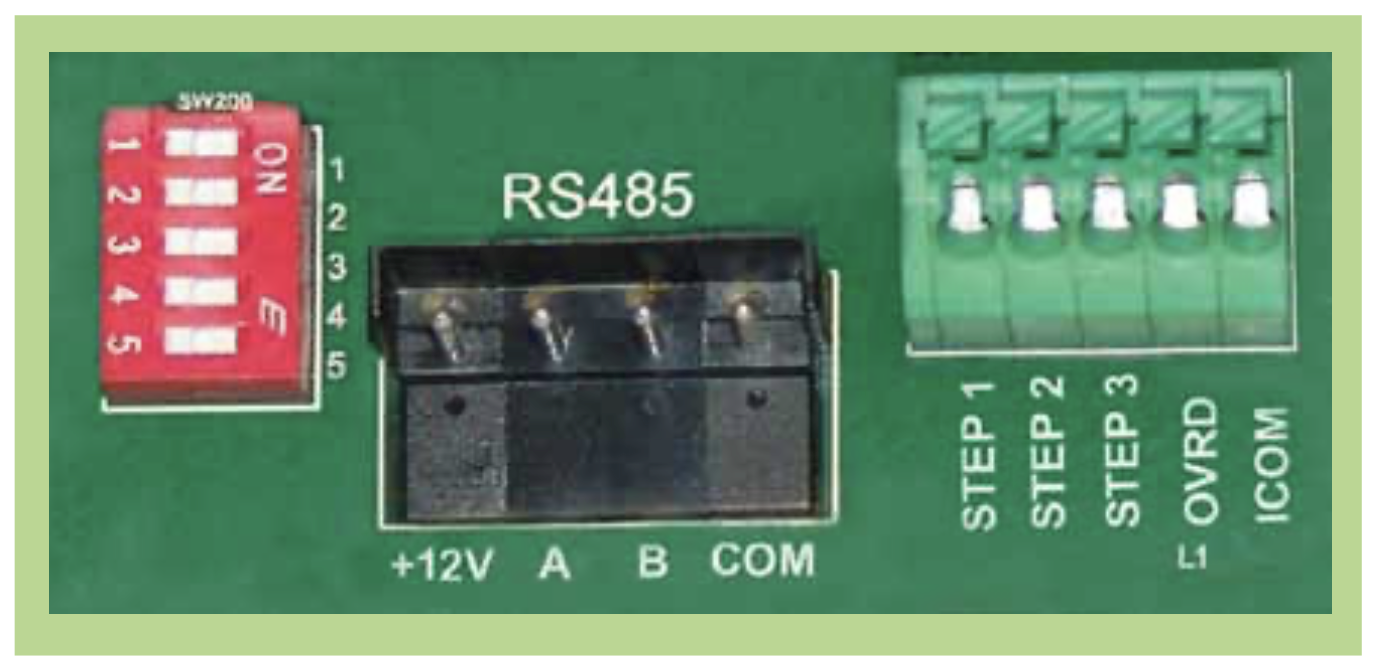
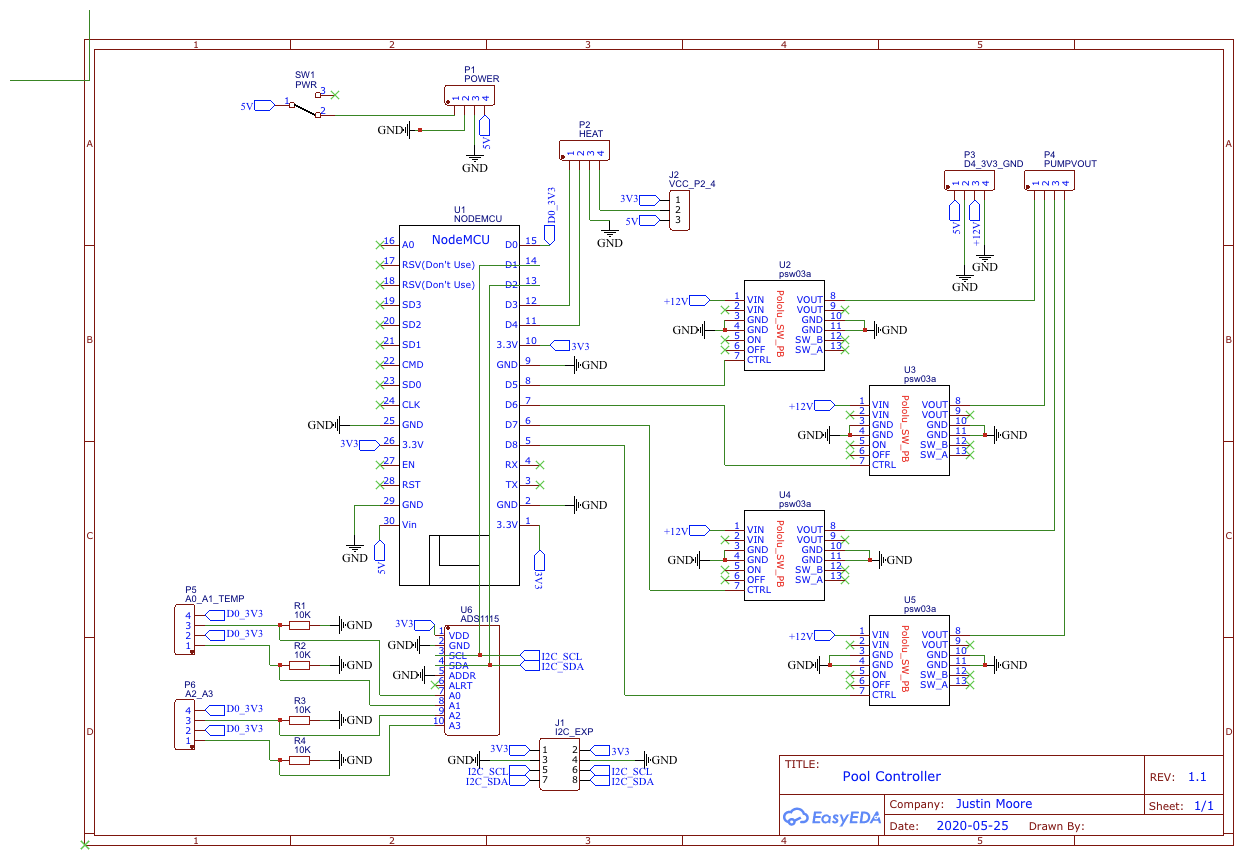
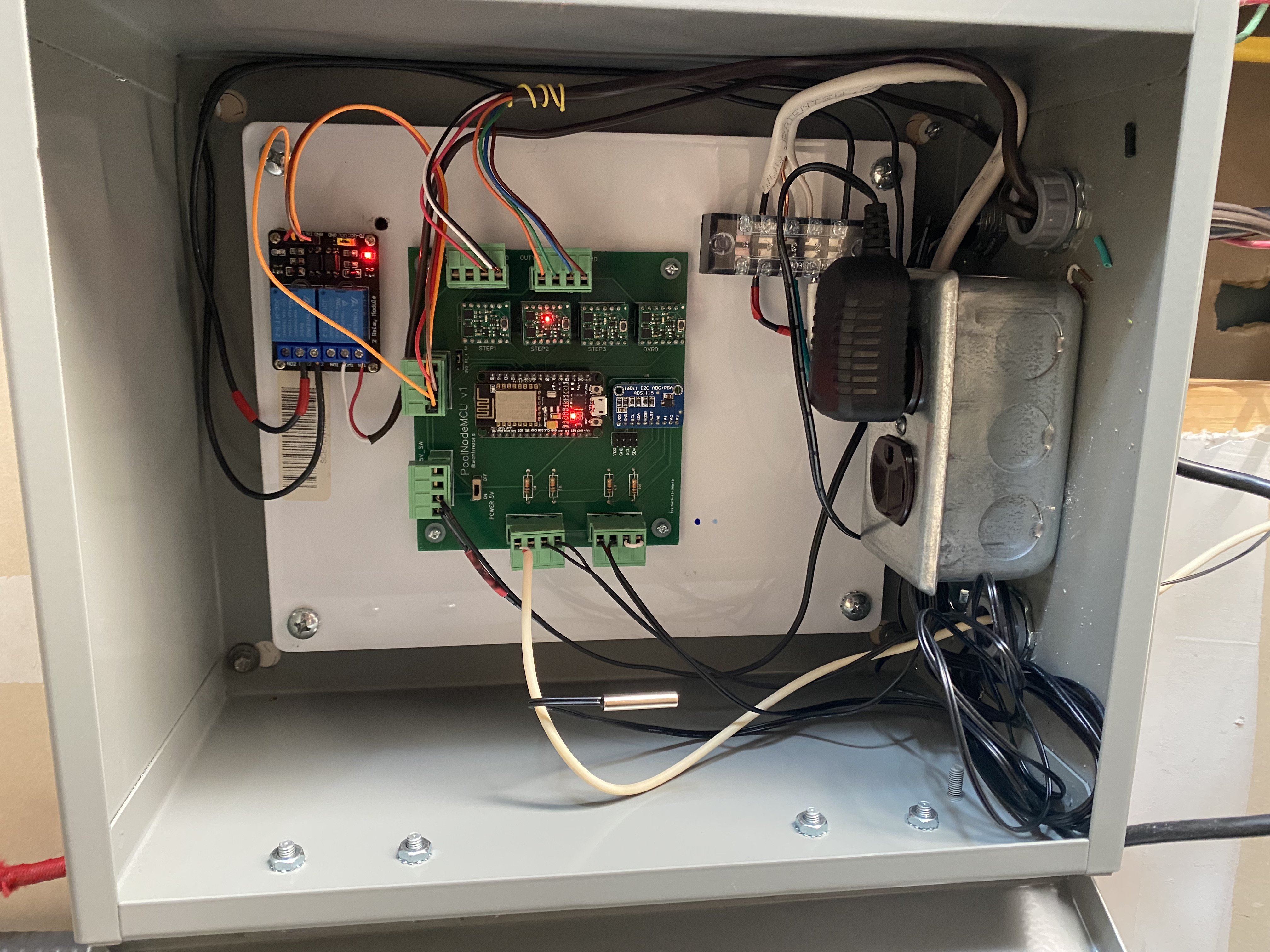
PoolNodeMCU uses GPIO output pins of a NodeMCU to control preset pump steps (motor speeds) as well as heater control via a dry contact. Pololu 12v high-side switches take 3.3V GPIO output signals from the NodeMCU and switch a +12V signal (provided by the pump). The switched +12V goes to input pins of Century Variable Speed motor to tell it which pre-programmed speed to run (Four programmable steps STEP1, STEP2, STEP3 and OVERRIDE). Another pair of GPIO pins control a set of relays, one of whichturns the Hayward H250 pool heater off/on. I'm using three 10k thermistors for reading intake water temp, output water temp, and ambient temp inside the NodeMCU enclosure.
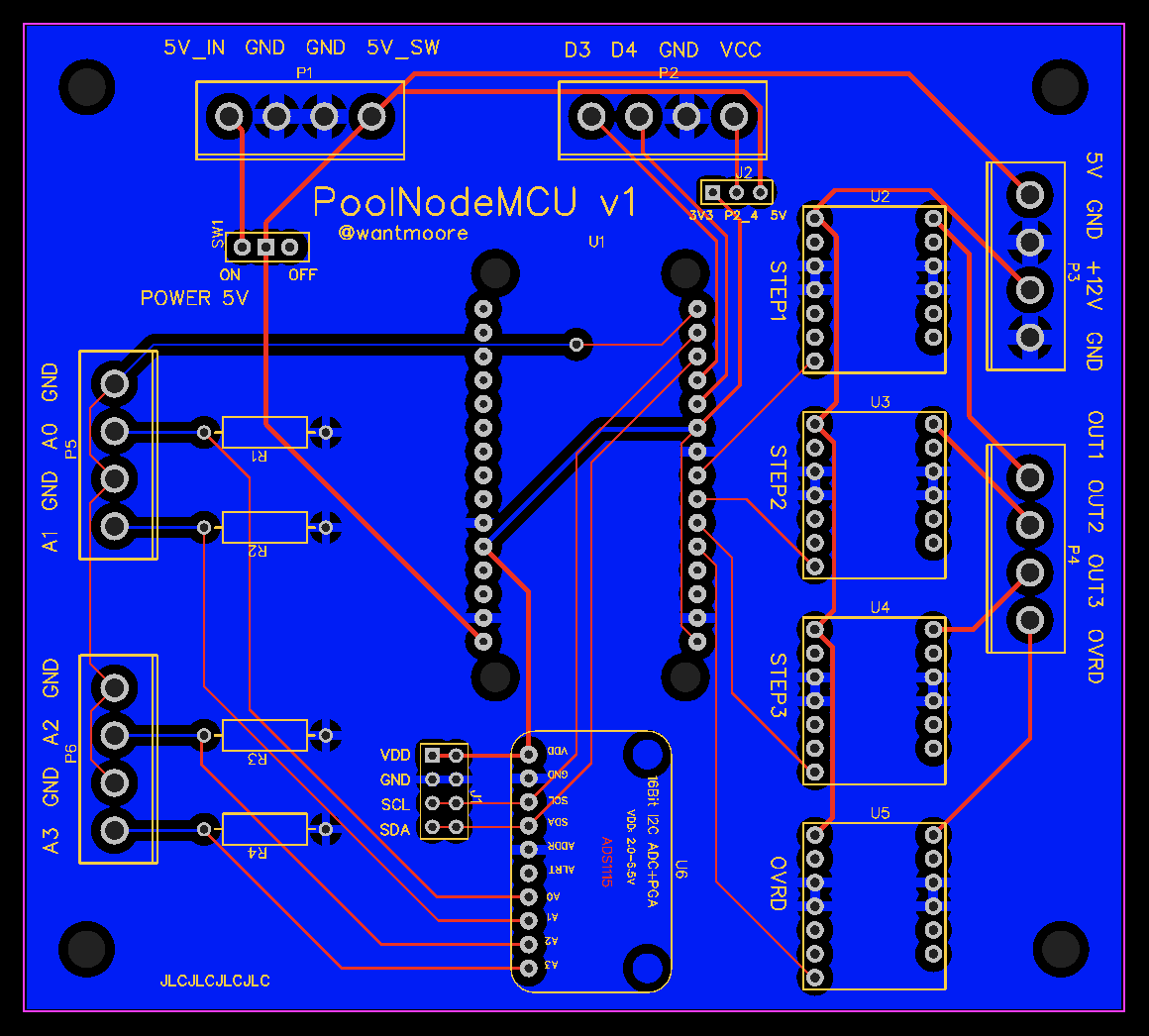
The custom PCB wasn't REALLY necessary, but at $25 for 5 boards, I couldn't stop myself. The final product is much neater/cleaner than I could've ever done with wires and jumpers on a breadboard/protoboard. The PCB design is somewhat custom to my component choices, but could pretty easily be modified for use by anyone looking for a more 'industrial' breakout board for the NodeMCU GPIO pins. D0 is already available at pins 2 and 4 of P5 and P6. D1 and D2 can be jumpered to P5 and P6 as well by connecting the SCL and/or SDA pins to the "outside" mounting hole for the 10K resistors (R1-R4). To get access to GPIO pins D5-D8, jumper across CTRL and VOUT pins of each Pololu switch (U2/U3/U4/U5) to connect P4 pins 1-4.
In addition to those GPIO pins, there are several accessory loctions for 3V3, 5V and GND around the board. There is a jumper up at the top (J2) to control whether you want 3V3 or 5V to the VCC pin (P2-4) at the top right on the board.
- NodeMCU
- ADS1115 ADC
- Pololu Mini-Switches
- Pentair Temperature Probe or NTC Temperature Sensor
- 10k Resistors
- Relay (Heater dry contact control)
- 4 pin Terminal Blocks Male and Female
- Power Switch
- Various Header Pins/Sockets
- 5V Power Supply (for NodeMCU)
- 12V Power Supply (for pump control)
- Hookup Wire for the outside connections(HVAC/thermostat wire or sprinkler control cable)
- Enclosure
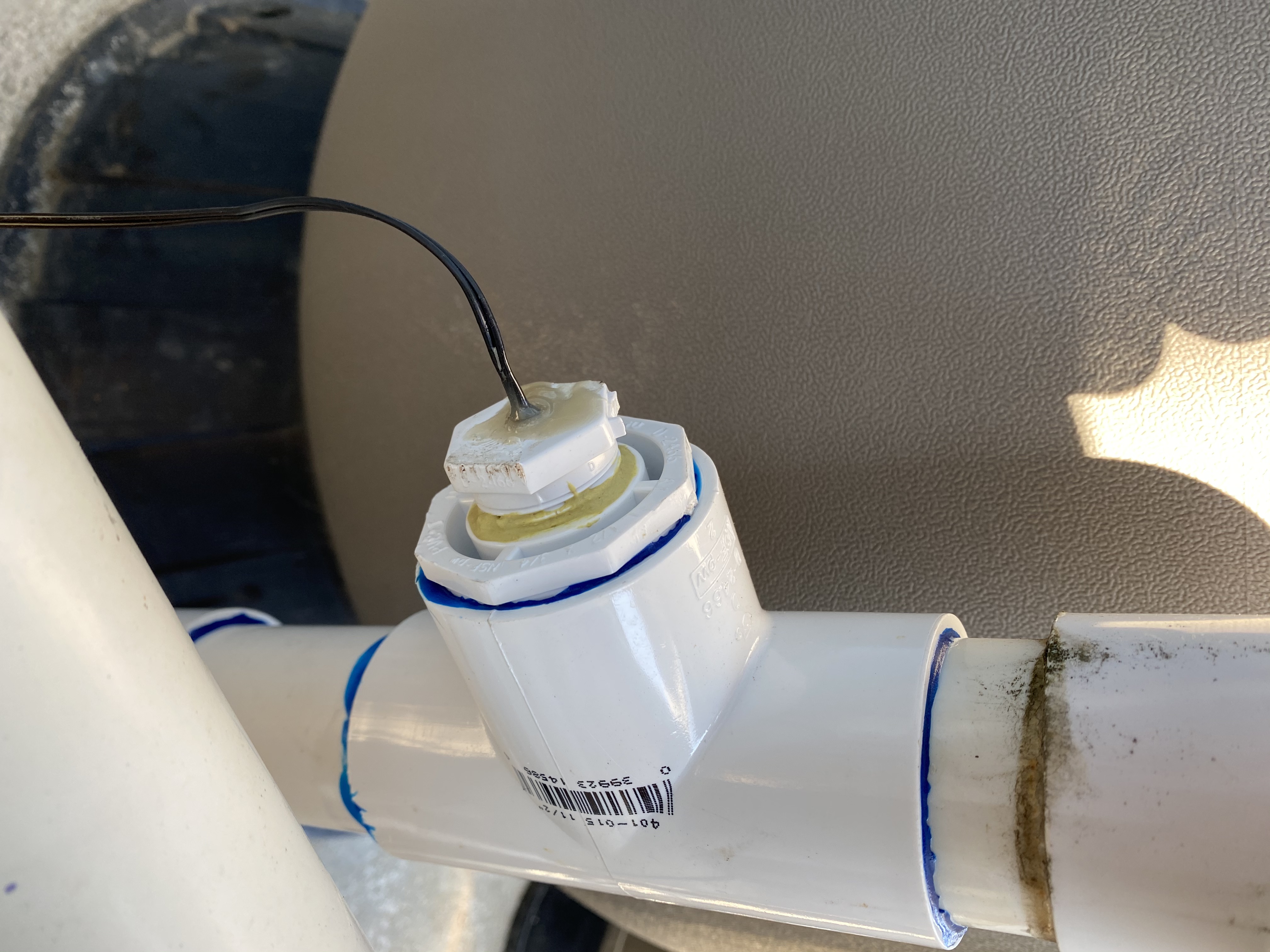
DIY temperature sensor made from a PVC Tee, adapter and screw-in plug
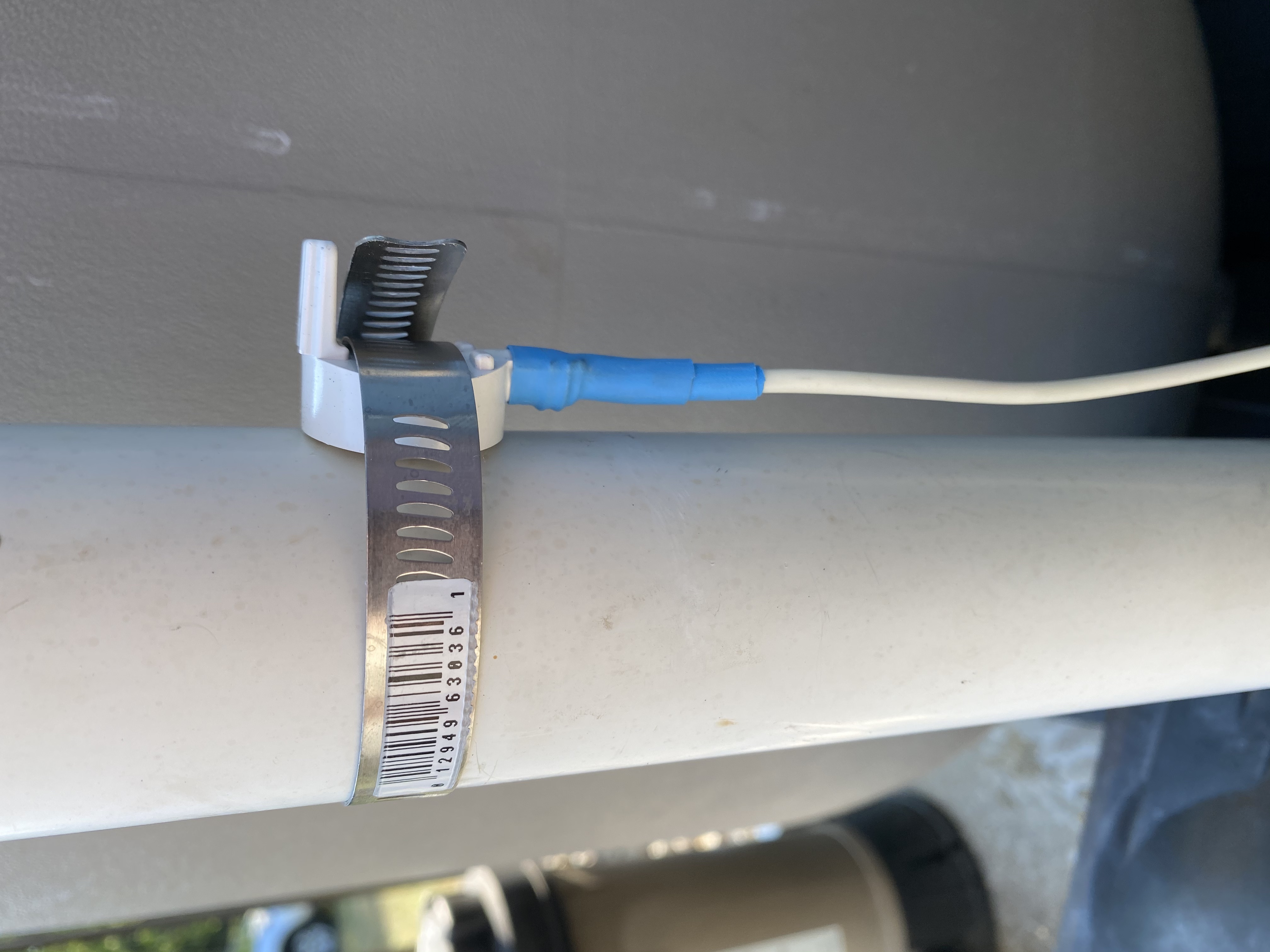
Pentair sensor
This is how the logic on the pump/motor side works, taken directly from the manual of the Century V-Green 165.