


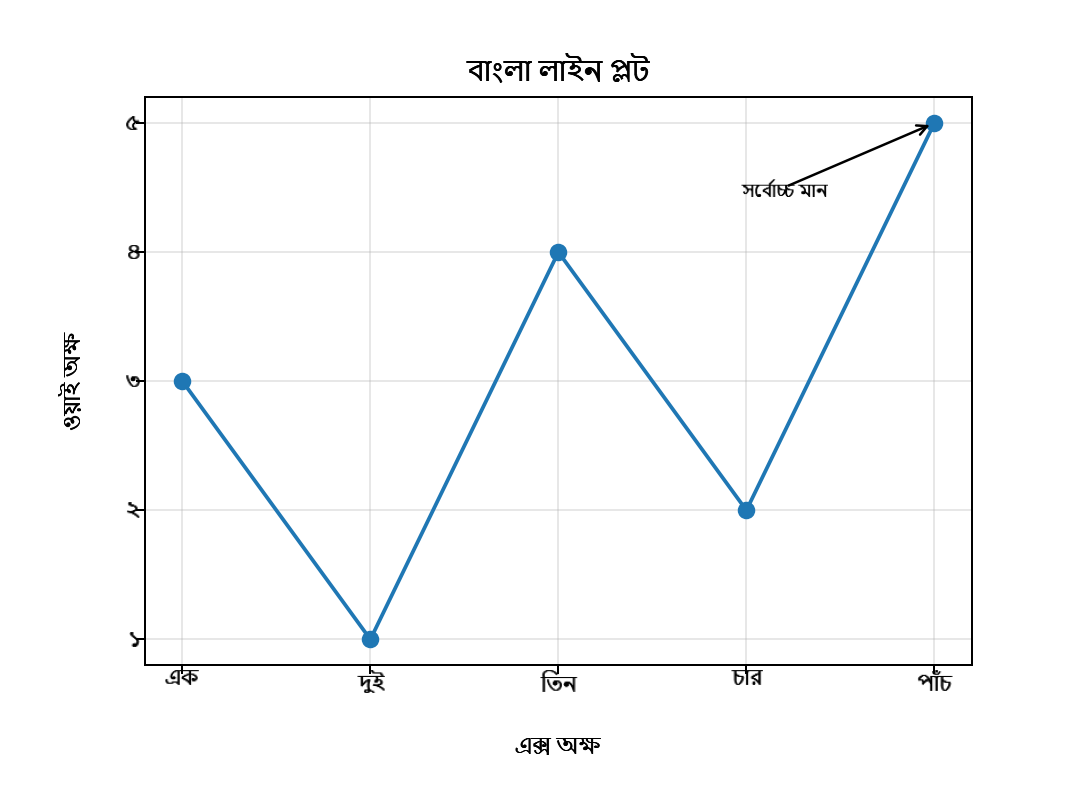
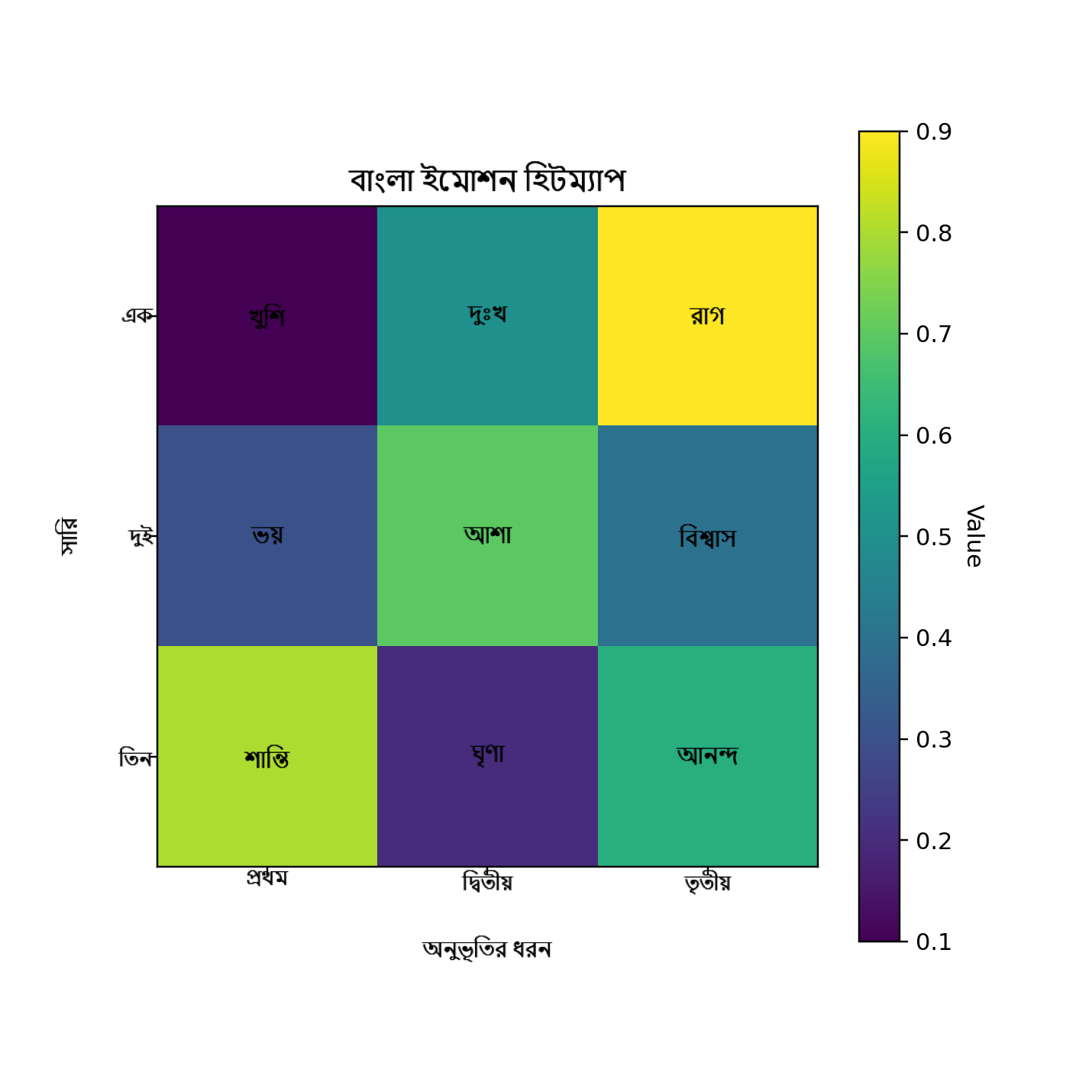
bangla-render is the first open-source Python library that enables fully correct Bengali text rendering inside Matplotlib and Seaborn.
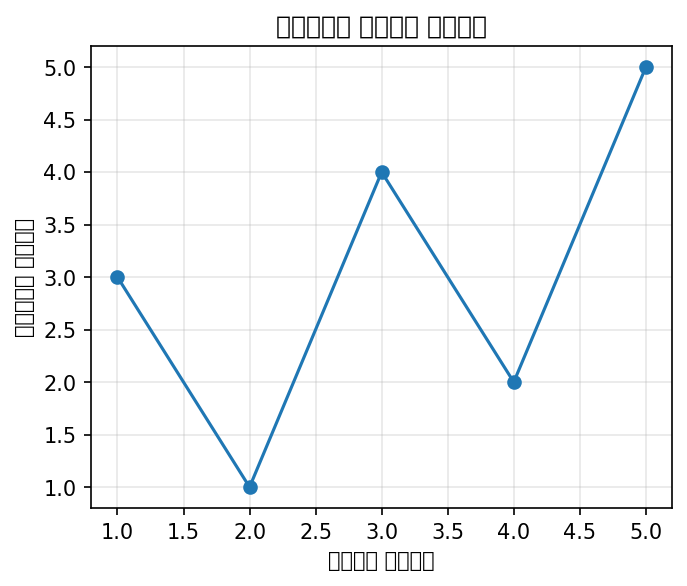
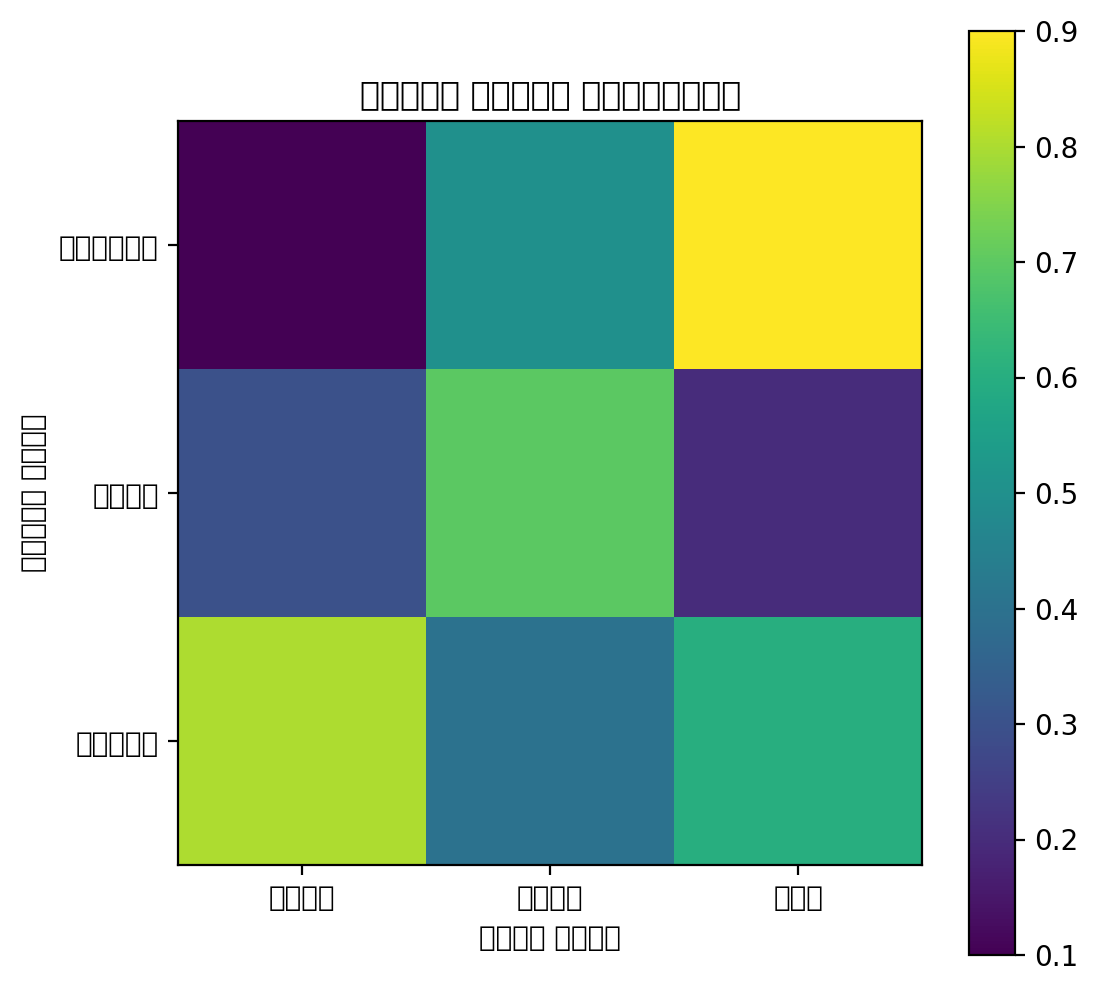
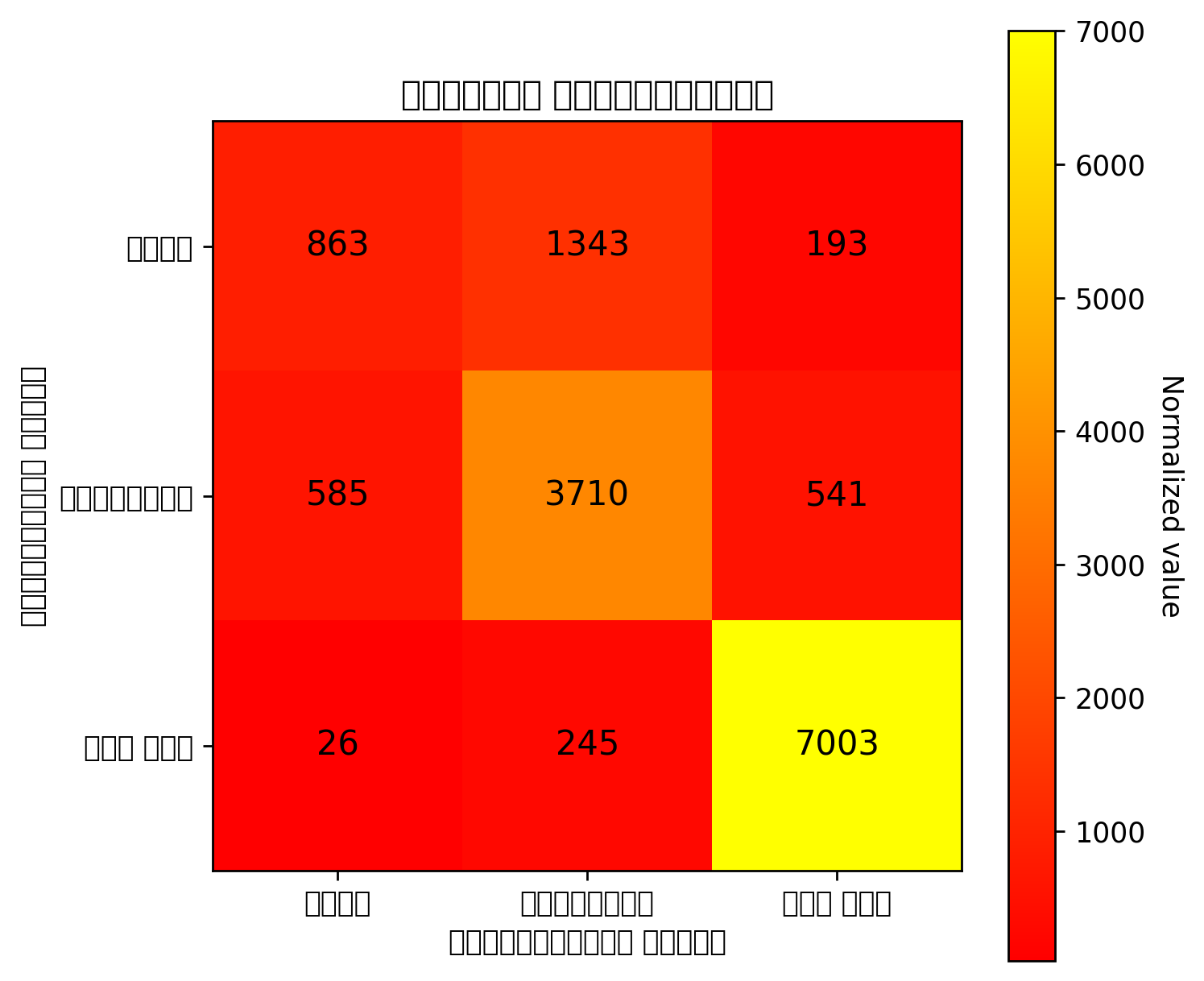
Matplotlib cannot shape Bengali text — it does not use HarfBuzz and therefore fails with:
- Matra (ি, ী, ু, ূ, ৃ)
- Reph (র্)
- Juktakkhor (জ্ঞ, ক্ষ, ন্দ, ত্ম, ন্ত …)
- GSUB/GPOS OpenType shaping
So Bengali titles, axis labels, annotations, and heatmap text become broken, disjoint, or scrambled.
💡 bangla-render solves this completely.
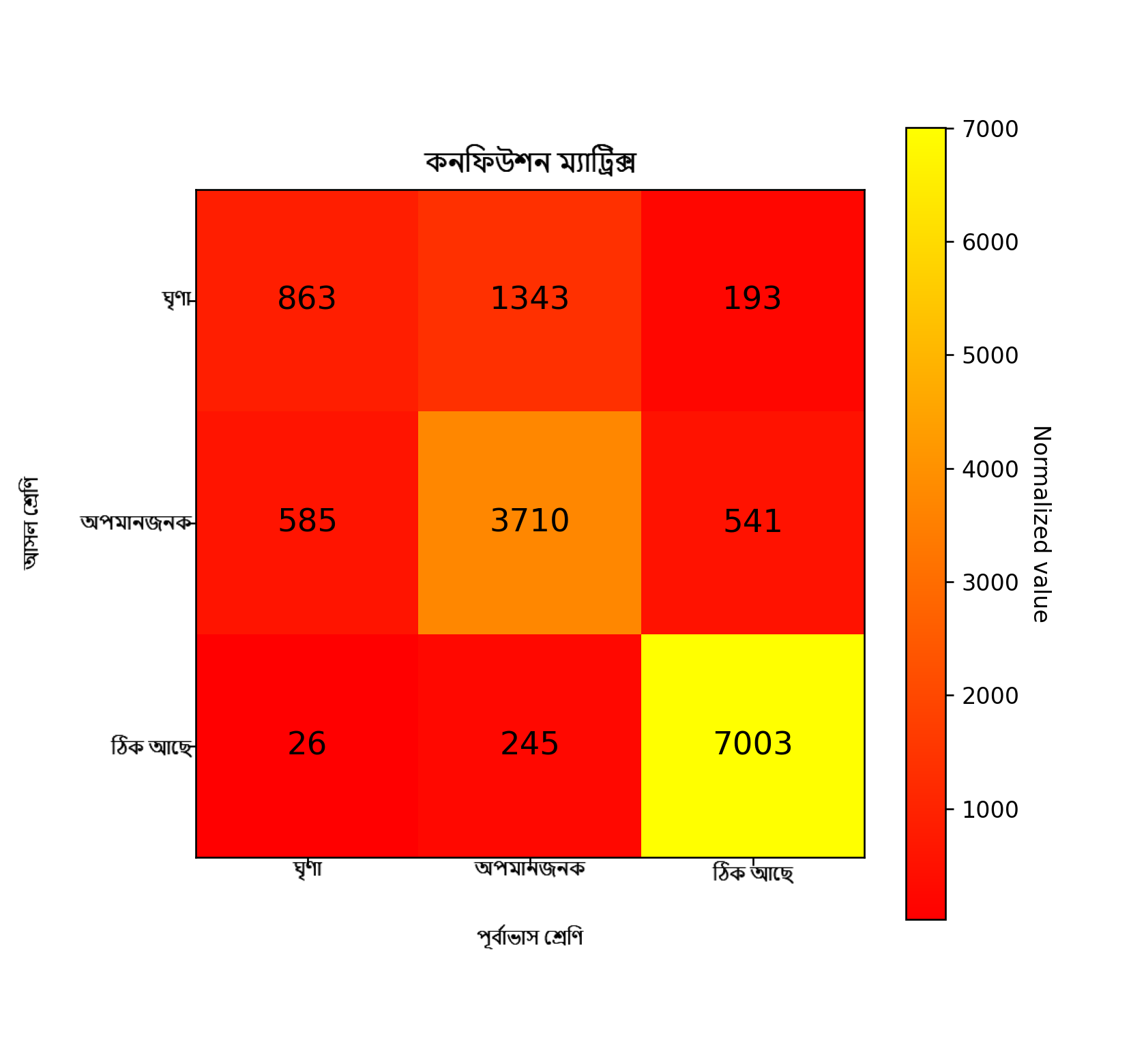
It uses Qt's HarfBuzz engine to shape Bengali correctly, renders it into an RGBA image, and overlays it into Matplotlib using OffsetImage, bypassing Matplotlib's broken text renderer entirely.
| Area | Change |
|---|---|
| Architecture | Single file split into 5 dedicated modules |
| Font handling | Auto-discovery, validation & fallback chain |
| Performance | LRU render cache (256 entries, ~4× speedup on repeated labels) |
| Layout engine | Full BanglaLayoutManager — event-driven, multi-subplot aware |
| Tick labels | New set_bangla_xticks() / set_bangla_yticks() |
| Indic scripts | Hindi (Devanagari) and Tamil verified out-of-the-box |
| Environment | Headless / Colab / Kaggle detection in backend.py |
| Test suite | Benchmark, debug JSON reports, 4-subplot and multi-subplot tests |
- Correct matra placement
- Proper conjunct formation
- Reph, rafar, vowel signs
- Multi-line paragraph shaping
- True Unicode (no ANSI/Bijoy hacks)
br.set_bangla_title(ax, "বাংলা শিরোনাম")
br.set_bangla_xlabel(ax, "এক্স অক্ষ")
br.set_bangla_ylabel(ax, "ওয়াই অক্ষ")
br.set_bangla_xticks(ax, positions, ["একটি", "দুটি", "তিনটি"])
br.set_bangla_yticks(ax, positions, ["রাগ", "আনন্দ", "ভয়"])
br.text(ax, 0.5, 0.5, "মাঝখানে", coord="axes")br.add_bangla_in_cell(ax, row, col, "খুশি", rows, cols)apply_bangla_layout(fig, auto=True) measures every placed label using the
Matplotlib renderer and adjusts margins so titles, tick labels, and axis labels
never overlap — correctly for any number of subplots.
- Matplotlib and Seaborn
- Jupyter / JupyterLab / VS Code
- Windows 10/11, macOS, Linux
- Any Matplotlib backend (Agg, TkAgg, QtAgg, …)
| Default Matplotlib | With bangla-render |
|---|---|
 |
 |
| Before | After |
|---|---|
 |
 |
| Before | After |
|---|---|
 |
 |
Matplotlib cannot shape Indic scripts. Even with Bangla fonts installed, it produces:
- Disjoint characters
- Wrong glyph order
- Broken juktakkhor
- Incorrect matra positioning
Existing "solutions" only work for very simple words like ভয়, রাগ — but fail completely for:
- খুশি
- দৃষ্টিভঙ্গি
- শ্রদ্ধা
- ব্যবস্থাপনা
- হাস্যোজ্জ্বল
- পর্যালোচনায়
- And any real paragraph
Before bangla-render, there was:
- No PyPI library
- No correct Bengali shaping
- No Seaborn heatmap support
- No way to set Bengali xlabel/ylabel/title
- No Unicode-safe method
bangla-render fills this gap for the first time.
Run the demo notebook directly in your browser — no setup needed:
| Platform | Launch |
|---|---|
| Kaggle |  |
| Google Colab |  |
pip install bangla-renderDependencies (installed automatically):
| Package | Purpose |
|---|---|
PySide6 |
Qt / HarfBuzz shaping engine |
NumPy |
RGBA array conversion |
Matplotlib |
Plot integration |
Font note: On Windows, Nirmala UI (built-in) is used automatically.
On Linux / macOS, install Noto Sans Bengali:
sudo apt install fonts-notoorbrew install font-noto-sans
import matplotlib.pyplot as plt
import bangla_render as br

br.init_renderer()                          # initialise Qt once

fig, ax = plt.subplots(figsize=(6, 4))

ax.plot([1, 2, 3, 4, 5], [2, 4, 3, 5, 4])

br.set_bangla_title(ax,  "রেখাচিত্র")
br.set_bangla_xlabel(ax, "সময় (মাস)")
br.set_bangla_ylabel(ax, "মান")
br.set_bangla_xticks(ax, [1, 2, 3, 4, 5],
                    ["জানু", "ফেব্রু", "মার্চ", "এপ্রিল", "মে"])

br.apply_bangla_layout(fig, auto=True)
plt.savefig("line_plot.png", dpi=150)
plt.show()import seaborn as sns
import numpy as np
import matplotlib.pyplot as plt
import bangla_render as br
br.init_renderer()
data = np.random.rand(3, 3)
words = [["খুশি", "রাগ", "আশা"],
["ভয়", "বিস্ময়", "শান্তি"],
["ঘৃণা", "আনন্দ", "সুখ"]]
fig, ax = plt.subplots(figsize=(6, 6))
sns.heatmap(data, ax=ax, cbar=True,
xticklabels=False, yticklabels=False)
rows, cols = data.shape
for i in range(rows):
for j in range(cols):
br.add_bangla_in_cell(ax, i, j, words[i][j], rows, cols)
br.set_bangla_title(ax, "বাংলা হিটম্যাপ")
br.set_bangla_xlabel(ax, "পূর্বাভাস শ্রেণি")
br.set_bangla_ylabel(ax, "আসল শ্রেণি")
br.apply_bangla_layout(fig, auto=True)
plt.savefig("heatmap.png", dpi=150)
plt.show()import matplotlib.pyplot as plt
import bangla_render as br
br.init_renderer()
fig, axes = plt.subplots(1, 2, figsize=(12, 5))
# Left subplot
axes[0].plot([1, 2, 3], [3, 1, 4])
br.set_bangla_title(axes[0], "বাম প্লট")
br.set_bangla_xlabel(axes[0], "সময়")
br.set_bangla_ylabel(axes[0], "মান")
# Right subplot — with colorbar (ylabel auto-skipped when blocked)
import numpy as np
im = axes[1].imshow(np.random.rand(3, 3), cmap="viridis")
fig.colorbar(im, ax=axes[1])
br.set_bangla_title(axes[1], "ডান হিটম্যাপ")
br.set_bangla_xlabel(axes[1], "কলাম")
br.apply_bangla_layout(fig, auto=True)
plt.savefig("multisubplot.png", dpi=150)
plt.show()The rendering pipeline is language-agnostic — pass any Brahmic script Unicode string and a matching OpenType font:
# Hindi (Devanagari) — uses Nirmala UI on Windows
br.set_bangla_ylabel(ax, "वास्तविक वर्ग",
                    font_family="Nirmala UI")

# Tamil — same font on Windows
br.set_bangla_ylabel(ax, "உண்மை வகை",
                    font_family="Nirmala UI")
Verified scripts: Bengali, Hindi (Devanagari), Tamil.
Expected to work (font availability required):
Assamese, Odia, Gujarati, Gurmukhi, Sinhala.
| Function | Description |
|---|---|
init_renderer() |
Initialise Qt application (call once at startup) |
check_environment() |
Report Qt status, headless mode, Colab/Kaggle detection |
get_renderer_status() |
Detailed Qt initialisation info |
| Function | Description |
|---|---|
find_best_bangla_font() |
Return the best available Bengali font name |
list_available_fonts() |
List all system fonts |
list_bangla_candidate_fonts() |
List Bengali candidate fonts found on system |
| Function | Description |
|---|---|
set_bangla_title(ax, text, **kw) |
Set per-axes title |
set_bangla_xlabel(ax, text, **kw) |
Set x-axis label |
set_bangla_ylabel(ax, text, **kw) |
Set y-axis label |
set_bangla_xticks(ax, positions, labels, **kw) |
Set x-axis tick labels |
set_bangla_yticks(ax, positions, labels, **kw) |
Set y-axis tick labels |
| Function | Description |
|---|---|
bangla_text(ax, x, y, text, coord="axes", **kw) |
Place text at arbitrary coordinates |
add_bangla_in_cell(ax, row, col, text, rows, cols, **kw) |
Annotate heatmap / matrix cell |
| Function | Description |
|---|---|
apply_bangla_layout(fig, auto=False, **kw) |
Adjust margins; auto=True measures placed artists |
| Function | Description |
|---|---|
get_render_cache_info() |
Return cache hit/miss counts and occupancy |
clear_render_cache() |
Clear the LRU cache (useful before benchmarking) |
| Function | Description |
|---|---|
render_text(text, output_path, **kw) |
Render text to a PNG file |
render_text_qimage(text, **kw) |
Render text to a QImage (internal use) |
render_paragraph(text, output_path, **kw) |
Render multi-line paragraph to PNG |
bangla-render v0.2 — five-module architecture
─────────────────────────────────────────────
backend.py      Qt application lifecycle, headless / Colab / Kaggle detection
fonts.py        Font discovery, validation (conjunct/matra test), fallback chain
renderer.py     HarfBuzz shaping via Qt, QImage rasterisation, LRU cache
layout.py       BanglaLayoutManager — event-driven, multi-subplot, colorbar-aware
mpl_support.py  Public Matplotlib API — all set_bangla_* functions
Measured on Windows 10, Python 3.11.9, font: Nirmala UI, N = 50 calls, cold cache.
| Text category | Median (ms) | Cache hit (ms) |
|---|---|---|
| Simple word (3–4 chars) | 0.27 | 0.06 |
| Conjunct consonant | 0.32 | 0.07 |
| Complex multi-conjunct | 0.40 | 0.08 |
| Axis label (medium) | 0.57 | 0.10 |
| 6×6 heatmap (36 cells, batch) | 10.5 ms total | — |
The LRU cache delivers roughly a 4× speedup for repeated labels.
git clone https://github.com/mbs57/bangla-render.git
cd bangla-render
pip install -e .
python tests/test_suite.py
Outputs saved to test_outputs/. Debug JSON reports saved to test_outputs/debug/.
Benchmark results saved to test_outputs/benchmark_results.txt and .json.
- v0.1 — Bengali rendering for title, xlabel, ylabel, heatmap cells
- v0.2 — Five-module architecture, font validation, LRU cache, tick labels, Indic scripts, layout engine
- v0.3 — Mixed Bengali + MathText (
$\alpha$) support - v0.4 — Vector output via SVG path extraction
- v0.5 — Extend verified Indic support: Odia, Gujarati, Malayalam, Telugu
- v1.0 — Production-ready stable release and full documentation site
MIT License — free for personal, academic, and commercial use.
If you use bangla-render in research, please cite:
@article{shuvo2025banglarender,
  title   = {bangla-render: Correct Bengali Text Rendering for
             Matplotlib \& Seaborn Using Qt/HarfBuzz},
  author  = {Shuvo, Mrinal Basak},
  journal = {SoftwareX},
  year    = {2025},
  note    = {Under review, Manuscript SOFTX-D-25-00884}
}This project aims to make scientific and data visualisation accessible to millions of Bengali speakers — helping students, educators, analysts, and researchers present data in their native language.
Built on the shoulders of Qt, HarfBuzz, Matplotlib, NumPy, and PySide6.