



Encrypted secrets manager for developers. One key unlocks everything.
murk stores encrypted secrets in a single .murk file that's safe to commit to git. It uses age encryption, works with direnv, and supports teams — all in one binary with no runtime dependencies.
murk is pre-1.0 and has not been independently audited. Use good judgment with production secrets.
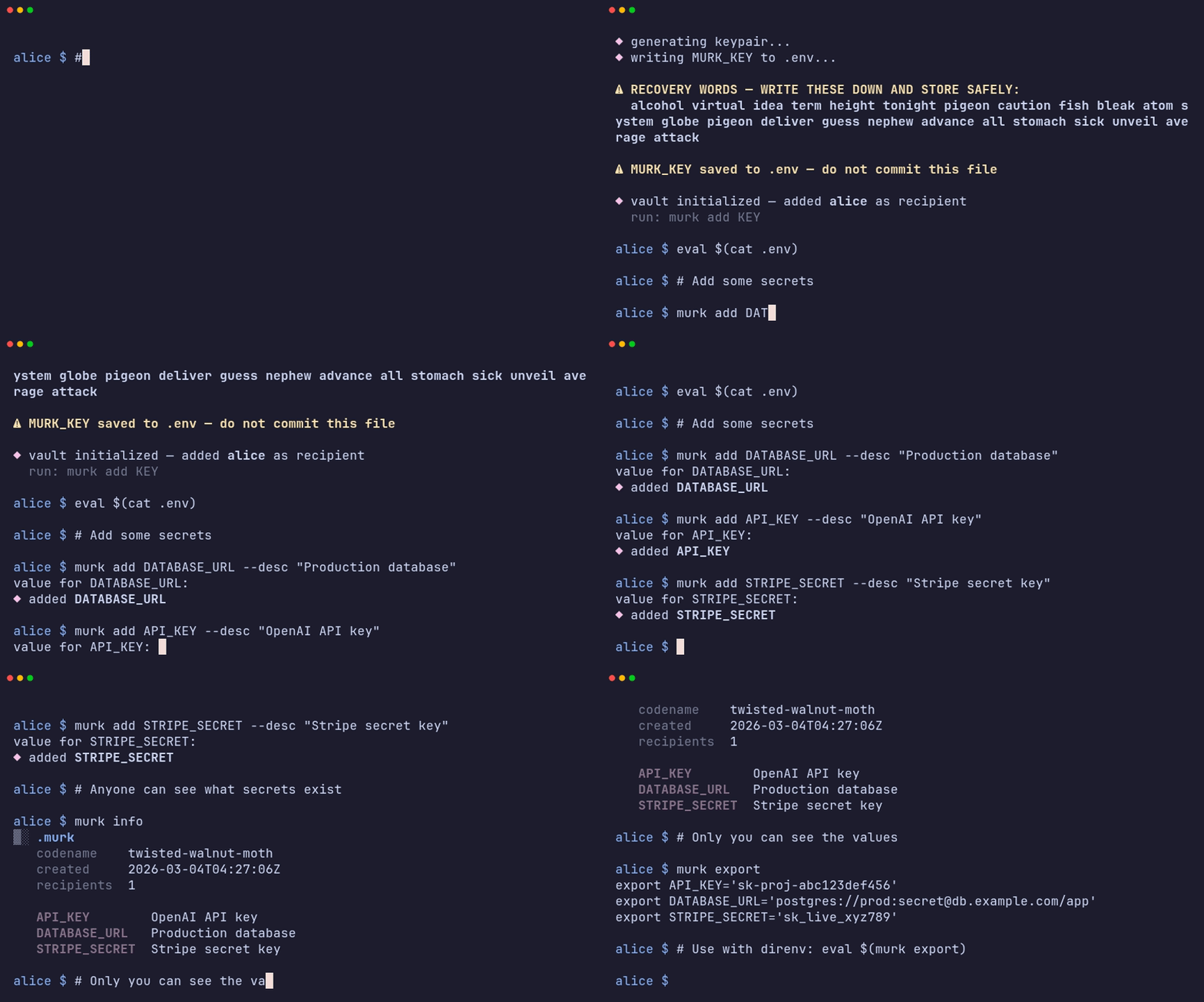
Most teams share .env files over Slack. That's bad. Tools like SOPS and Vault exist but they're complex, require cloud setup, or pull in runtimes you don't want.
murk is simple: one key in your .env, one encrypted file in your repo, done.
brew tap iicky/murk && brew install murkOr via Cargo:
cargo install murk-cli# Initialize — generates your key and recovery phrase
murk init
# Add secrets (prompts for value, hidden input)
murk add DATABASE_URL
murk add OPENAI_KEY
# Use with direnv
echo 'eval $(murk export)' > .envrcYour .murk file has a plaintext header (key names, descriptions — no values) and encrypted values. Anyone can see what secrets exist via murk info. Only recipients with a valid MURK_KEY can see values.
murk info           # Public schema — works without a key
murk ls             # List key names
murk get KEY        # Print a single value
murk export # Shell export statementsmurk has two layers of encryption inside the .murk file:
Shared secrets (the murk) are encrypted to all recipients. When you run murk add KEY, every authorized team member can decrypt it. This is where production credentials, API keys, and other team-wide secrets live.
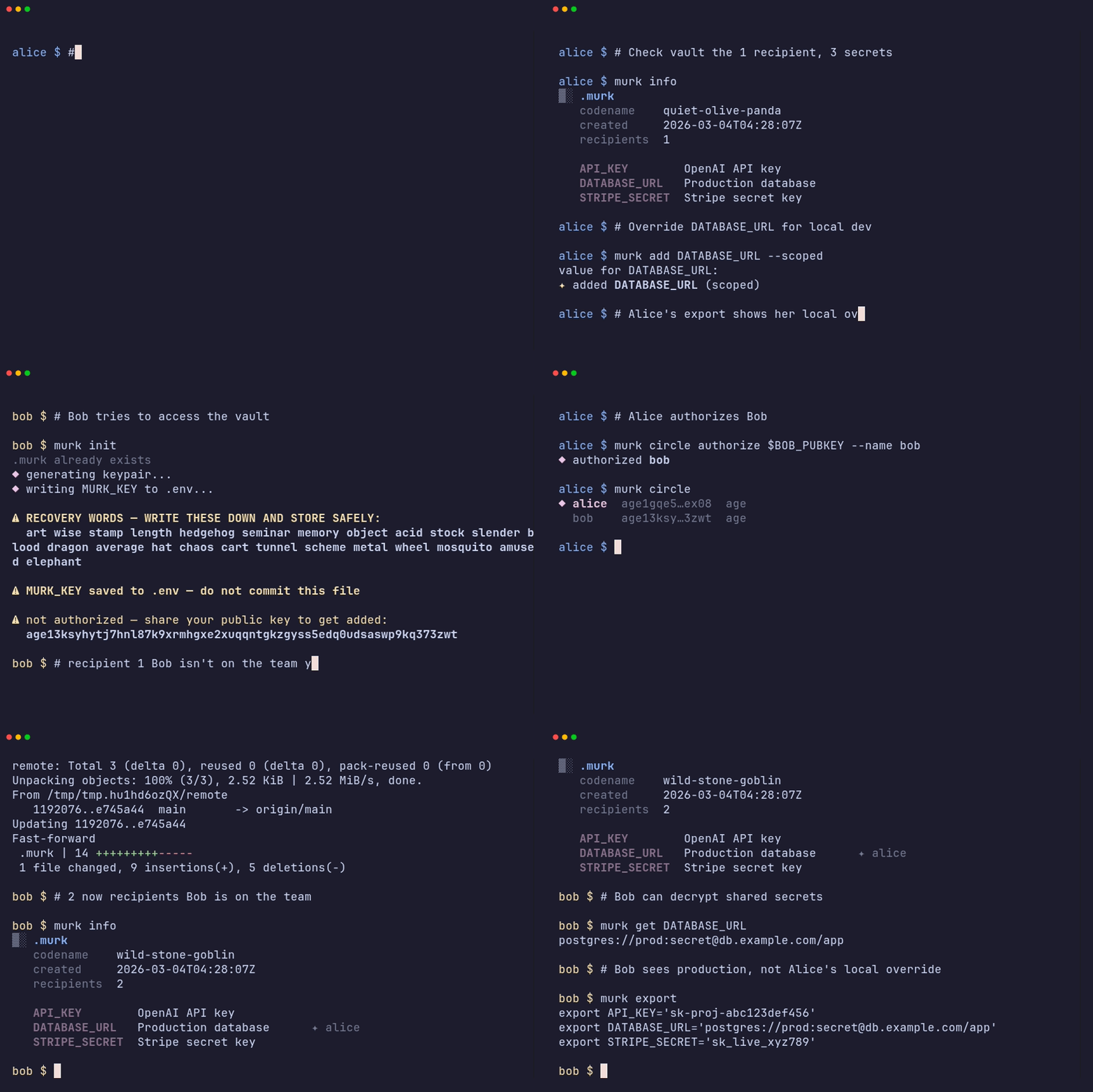
Scoped secrets (motes) are encrypted to only your key. When you run murk add KEY --scoped, the value is encrypted to only your key in the vault. During murk export, scoped values override shared ones — so you can use a local database URL while the rest of the team uses production.
# Shared — everyone sees this (prompts for value, hidden input)
murk add DATABASE_URL

# Scoped — only you see this, overrides the shared value during export
murk add DATABASE_URL --scoped

# Or pipe for scripting (use a command that doesn't leak to shell history)
pbpaste | murk add DATABASE_URL# Alice sets up the vault
murk init
murk add DATABASE_URL
# Bob generates his own key
murk init
# Alice adds Bob as a recipient
murk circle authorize age1bob... --name bob@example.com
# Bob can now decrypt
murk export
# Bob overrides a value for local dev
murk add DATABASE_URL --scoped
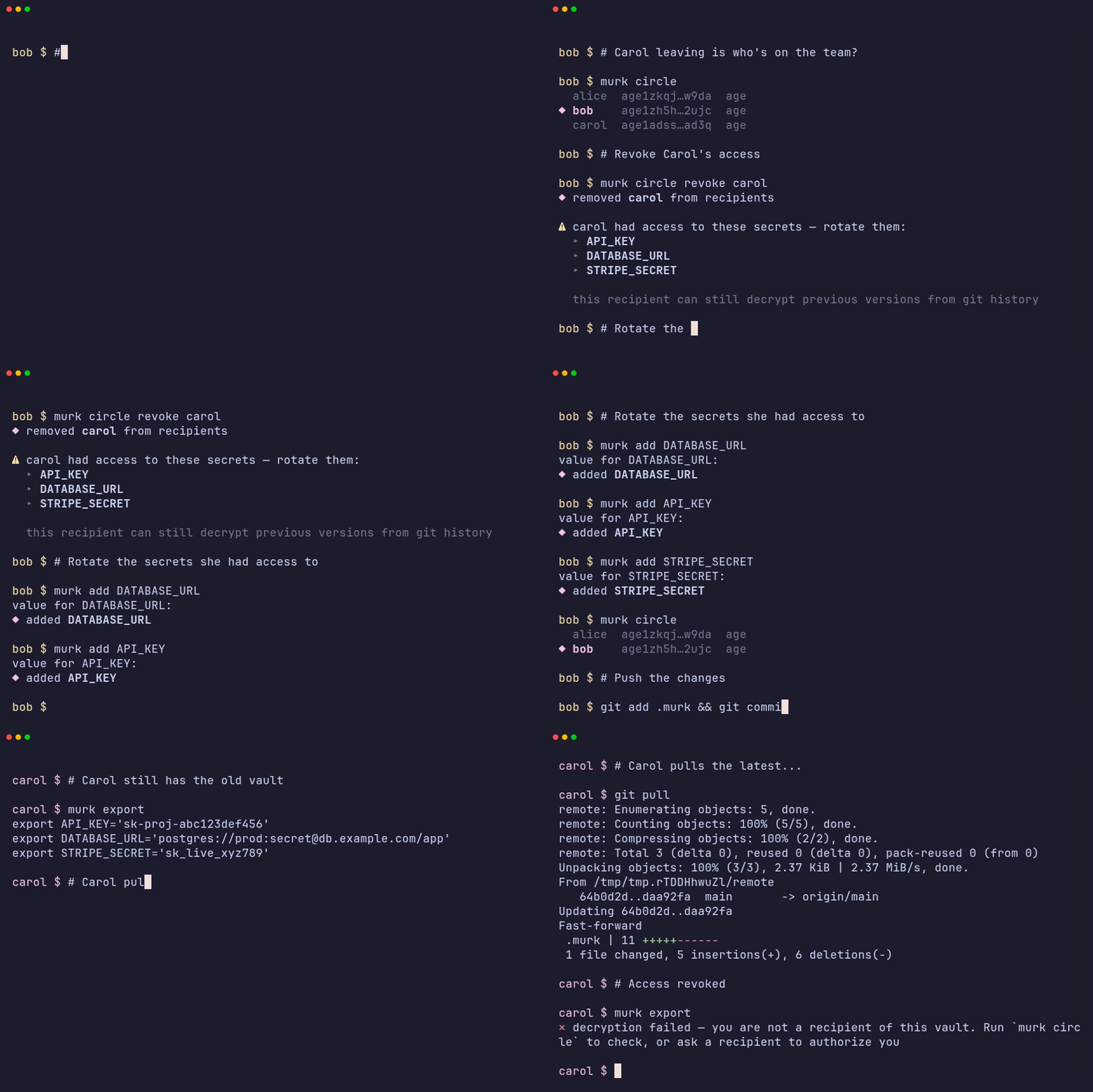
When someone leaves, revoke their access and rotate the secrets:
murk circle revoke carol
murk add DATABASE_URL    # prompts for new value
murk add API_KEY
git commit -am "revoke carol, rotate secrets" && git push
Use murk-action to decrypt secrets in GitHub Actions workflows:
steps:
  - uses: actions/checkout@v4
  - uses: iicky/murk-action@v1
    with:
      murk-key: ${{ secrets.MURK_KEY }}
  - run: ./deploy.sh  # all vault secrets are now in the environment
Store your MURK_KEY as a GitHub Actions secret. All decrypted values are masked in logs.
Your key is a BIP39 mnemonic. murk init prints 24 recovery words — write them down.
# Lost your key? Recover it (prompts for phrase, hidden input)
murk restore| Command | Description |
|---|---|
murk init |
Generate keypair and create vault |
murk add KEY [--scoped] |
Add or update a secret (prompts for value) |
murk rm KEY |
Remove a secret |
murk get KEY |
Print a single decrypted value |
murk ls |
List key names |
murk export |
Print all secrets as shell exports |
murk import [FILE] |
Import secrets from a .env file |
murk describe KEY "..." |
Set description for a key |
murk info |
Show public schema (no key required) |
murk circle |
List recipients |
murk circle authorize PUBKEY [--name NAME] |
Add a recipient |
murk circle revoke RECIPIENT |
Remove a recipient |
murk restore [PHRASE] |
Recover key from BIP39 phrase |
murk recover |
Show recovery phrase for current key |
- age does the crypto — no custom cryptography
- Git is the audit trail — murk doesn't replicate what git does
- Header is public, values are private — key names are visible, values are not
- Explicit over magic — never silently overwrites or destroys data
See SPEC.md for the full specification.
Shell history — murk add and murk restore prompt interactively with hidden input. Prefer these over passing secrets as arguments or via echo, which can leak to shell history. When piping from scripts, use commands that don't record to history (e.g. pbpaste | murk add KEY or reading from a file).
Key names are plaintext — the .murk header exposes key names (e.g. STRIPE_SECRET_KEY, DATABASE_URL) so that murk info works without a key and git diffs stay readable. Only values are encrypted. If your threat model requires hiding what services you use, this is a trade-off to be aware of.
Access control is advisory — any authorized recipient can decrypt all shared secrets. Per-key access metadata in the schema is cosmetic and not enforced cryptographically. If a recipient has MURK_KEY and is in the recipient list, they can read everything in the shared layer. Use scoped secrets (motes) for values that should stay private to one recipient.
See THREAT_MODEL.md for the full threat model.
MIT OR Apache-2.0