is the acronym for Application Programming Interface, which is a software intermediary that allows two applications to talk to each other. Each time you use an app like Facebook, send an instant message, or check the weather on your phone, you're using an API.

Most modern web applications expose APIs that clients can use to interact with the application. A well-designed web API should aim to support:
-
Platform independence. Any client should be able to call the API, regardless of how the API is implemented internally. This requires using standard protocols, and having a mechanism whereby the client and the web service can agree on the format of the data to exchange.
-
Service evolution. The web API should be able to evolve and add functionality independently from client applications. As the API evolves, existing client applications should continue to function without modification. All functionality should be discoverable so that client applications can fully use it.
This guidance describes issues that you should consider when designing a web API.
In 2000, Roy Fielding proposed Representational State Transfer (REST) as an architectural approach to designing web services. REST is an architectural style for building distributed systems based on hypermedia. REST is independent of any underlying protocol and is not necessarily tied to HTTP. However, most common REST API implementations use HTTP as the application protocol, and this guide focuses on designing REST APIs for HTTP.
-
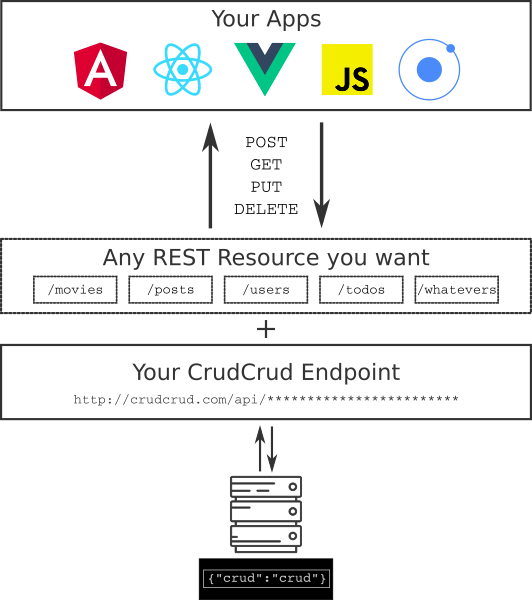
REST APIs are designed around resources, which are any kind of object, data, or service that can be accessed by the client.
-
A resource has an identifier, which is a URI that uniquely identifies that resource.
- GET retrieves a representation of the resource at the specified URI. The body of the response message contains the details of the requested resource.
- POST creates a new resource at the specified URI. The body of the request message provides the details of the new resource. Note that POST can also be used to trigger operations that don't actually create resources.
- PUT either creates or replaces the resource at the specified URI. The body of the request message specifies the resource to be created or updated.
- PATCH performs a partial update of a resource. The request body specifies the set of changes to apply to the resource. DELETE removes the resource at the specified URI.
The Open API Initiative was created by an industry consortium to standardize REST API descriptions across vendors. As part of this initiative, the Swagger 2.0 specification was renamed the OpenAPI Specification (OAS) and brought under the Open API Initiative.
-
The OpenAPI Specification comes with a set of opinionated guidelines on how a REST API should be designed. That has advantages for interoperability, but requires more care when designing your API to conform to the specification.
-
OpenAPI promotes a contract-first approach, rather than an implementation-first approach. Contract-first means you design the API contract (the interface) first and then write code that implements the contract.
i want to know more about how to use api more in real react app and how to get full benefit from it