You signed in with another tab or window. Reload to refresh your session.You signed out in another tab or window. Reload to refresh your session.You switched accounts on another tab or window. Reload to refresh your session.Dismiss alert
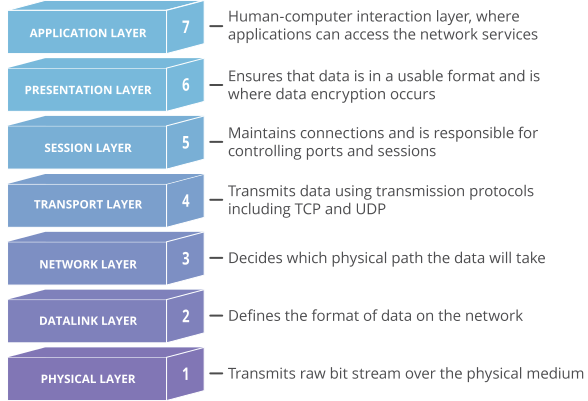
The open systems interconnection (OSI) model, a conceptual framework that enables disparate communication systems to exchange data via established protocols, was created by the International Organization for Standardization (IOS).
The OSI, or Open Systems Interconnection, provides a standard for interoperability across different computer systems.
One could think of the OSI Model as a common language for computer networking.Its foundation is the idea that a communication system may be broken down into seven abstract levels, each one built on top of the previous.
📍TCP/IP Model
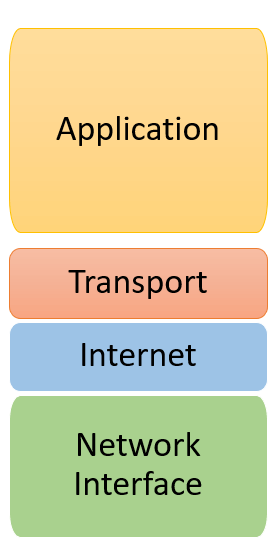
The Transmission Control Protocol/Internet Protocol Model is referred to as the TCP/IP model.
This model is a component of the network domain created especially to monitor effective and error-free data transfer.
 TCP/IP Model helps you to determine how a specific computer should be connected to the internet and how data should be transmitted between them. It helps you to create a virtual network when multiple computer networks are connected together. The purpose of TCP/IP model is to allow communication over large distances.
 TCP/IP stands for Transmission Control Protocol/ Internet Protocol. TCP/IP Stack is specifically designed as a model to offer highly reliable and end-to-end byte stream over an unreliable internetwork.
2. Web Attack
Web Attack is a type of Cyber attack, that is done on websites and web aplications.web attacks are done on sites to make them damaged, to gather informations, to gain unprivilaged access or cookie stealing. There are 2 kind of web attacks.
📍A, Client-Side Attack
This type of Web attack is done on the front-end of the site, that means on the html,css,js and other.
    Ex: reflected XSS, HTML injection, etc...
📍B, Server-Side Attack
This type of web attack is done on the Back-end of a site, this done on the server of the site hosted on.
    Ex: Stored XSS, HTTP Smuglling, Server-side request forgery...