POSTER
WHAT?
- The ability to generate, replicate or infer code using a computer.
HOW?
- NOW: Write programs for computer to execute.
- RESEARCH: Use data to develop models for writing programs
- DREAM: Let the computer write and execute its own program

HIGHLIGHTS
OVERVIEW OF PRESENTATION
- Part 2: Machine Learning Overview (types of problems in PI, CV and NLP)
- Part 3: Tensorflow Intro & Models
- Part 4: Program Induction Applications
- Parts 5, 6, 7: Further Ideas
down to here should take around 10 minutes
Computer Vision
Train with images to infer image properties:
- T1.hand-written digit recognition
- T2.object detection
- T3.segmentation
Natural Language Processing
Train with text to infer text properties
- T4.spam detection
- T5.sentiment analysis
- T6.translation
Program Induction
Train with code/IO pairs to infer code/IO pairs
- T7.program synthesis
- T8.neural programming
- T9.software applications (understand already written software):
- defect prediction
- semantics extraction, grouping
- target areas
down to here we have a total of 30 minutes
Link: https://playground.tensorflow.org/
| Tensor | Flow |
|---|---|
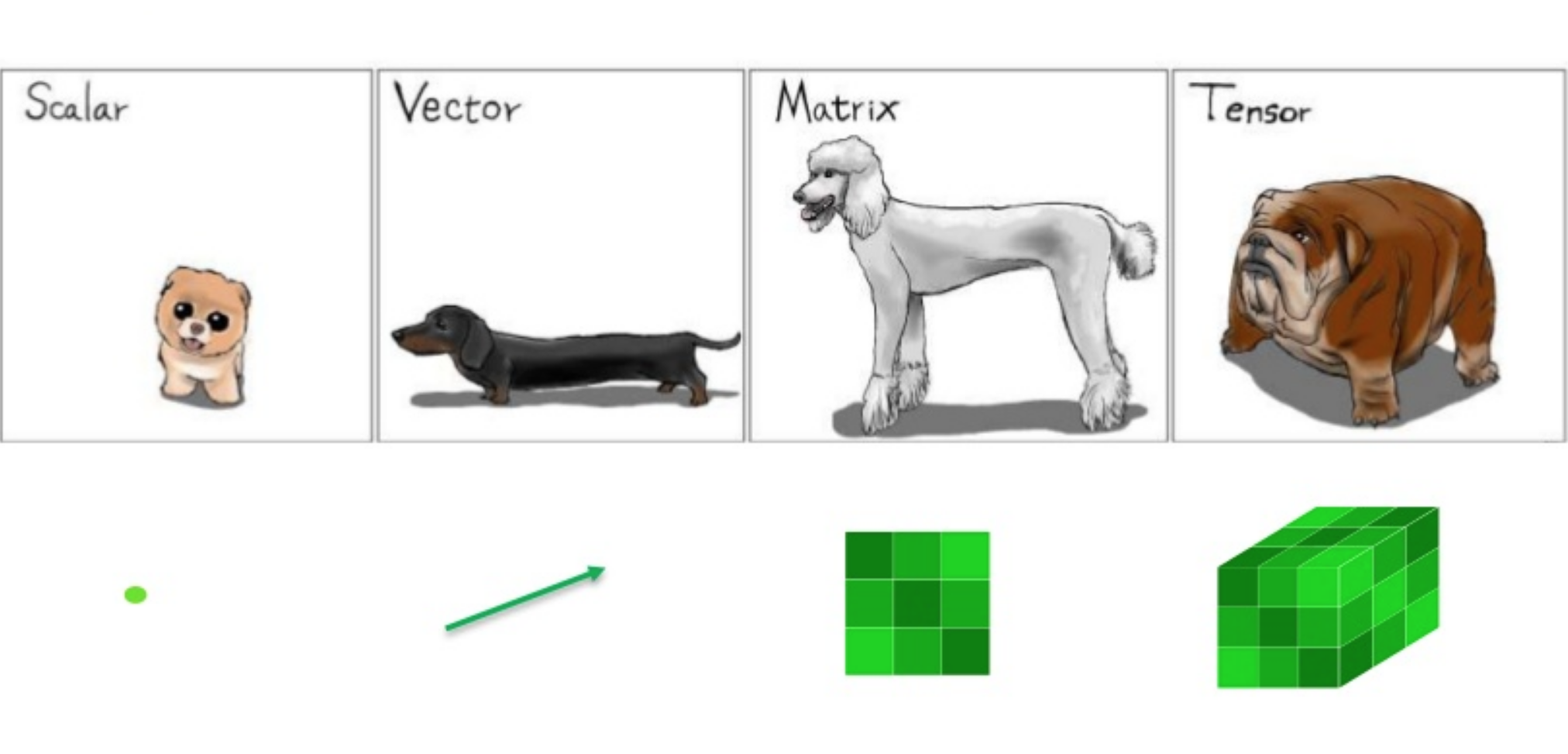 |
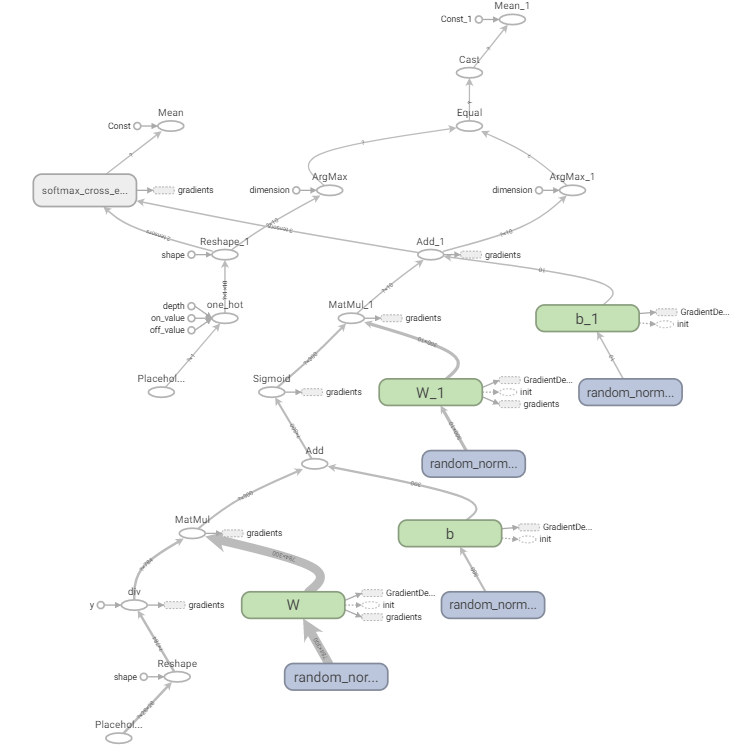 |
| Computational Units | Computational Graphs |
activ(Wx + b) -> y
# Initialize Learnable Values
def network_layer(input_nodes, output_nodes):
  layer = {
    'weights': tf.Variable(tf.random_normal([input_nodes, output_nodes])),
    'biases': tf.Variable(tf.random_normal([output_nodes]))
  }
  return layer
To explain:
tf.Variabletf.random_normal
# Create Computation Graph
def network_model(data, layer_sizes):
  # Network Architecture
  hidden_layers = []
  hidden_layers.append(network_layer(n_nodes_input, layer_sizes[0]))
  for i in range(1, len(layer_sizes)):
    hidden_layers.append(network_layer(layer_sizes[i-1], layer_sizes[i]))
  output_layer = network_layer(layer_sizes[-1], n_classes)
  # Computation Pipeline
  activations = []
  activations.append(tf.nn.relu(tf.add(tf.matmul(data, hidden_layers[0]['weights']), hidden_layers[0]['biases'])))
  for i in range(1, len(layer_sizes)):
    activations.append(tf.nn.relu(tf.add(tf.matmul(activations[i-1], hidden_layers[i]['weights']), hidden_layers[i]['biases'])))
  output = tf.add(tf.matmul(activations[-1], output_layer['weights']), output_layer['biases'])
  return output
To explain:
tf.addtf.matmultf.nn.relu
def network_train(x, layer_sizes):
  # Hypothesis
  prediction = network_model(x, layer_sizes)
  # Loss/Cost Function
  cost = tf.reduce_mean(tf.nn.softmax_cross_entropy_with_logits(logits = prediction, labels = y_))
  # Optimization Function (Gradient Descent)
  optimizer = tf.train.AdamOptimizer().minimize(cost)
  obtained_accuracy = 0.0
  # Launch tensorflow session
  with tf.Session() as sess:
    sess.run(tf.global_variables_initializer())
    for epoch in range(n_epochs):
      epoch_cost = 0
      for _ in range(num_examples/batch_size):
        # Perform gradient descent in batches (Memory Consumption reasons)
        batch_x, batch_y = next_batch(batch_size)
        _, batch_cost = sess.run([optimizer, cost], feed_dict = {x: batch_x, y_: batch_y})
        epoch_cost += batch_cost
      print ('Epoch', epoch, 'completed out of', n_epochs, 'cost:', epoch_cost)
    correct = tf.equal(tf.argmax(prediction,1), tf.argmax(y_,1))
    accuracy = tf.reduce_mean(tf.cast(correct, 'float'))
    obtained_accuracy = accuracy.eval({x:validation_samples, y_:validation_labels})
    print ('Accuracy:', obtained_accuracy)
  return obtained_accuracy
To explain:
tf.Session,sess.runtf.reduce_meantf.equaltf.argmaxtf.castevaltf.nn.softmax_cross_entropy_with_logitstf.train.AdamOptimizer().minimize(cost)next_batch(batch_size)
To explain better:
- optimizer and gradient descent
- what a session is
======= 24 lines of code (1,2) 24 lines of code (3) 14 operations TOTAL: 48 (lines), 14 (operations)
down to here we have a total of 1 hour
Link: https://www.microsoft.com/en-us/research/wp-content/uploads/2017/03/main.pdf
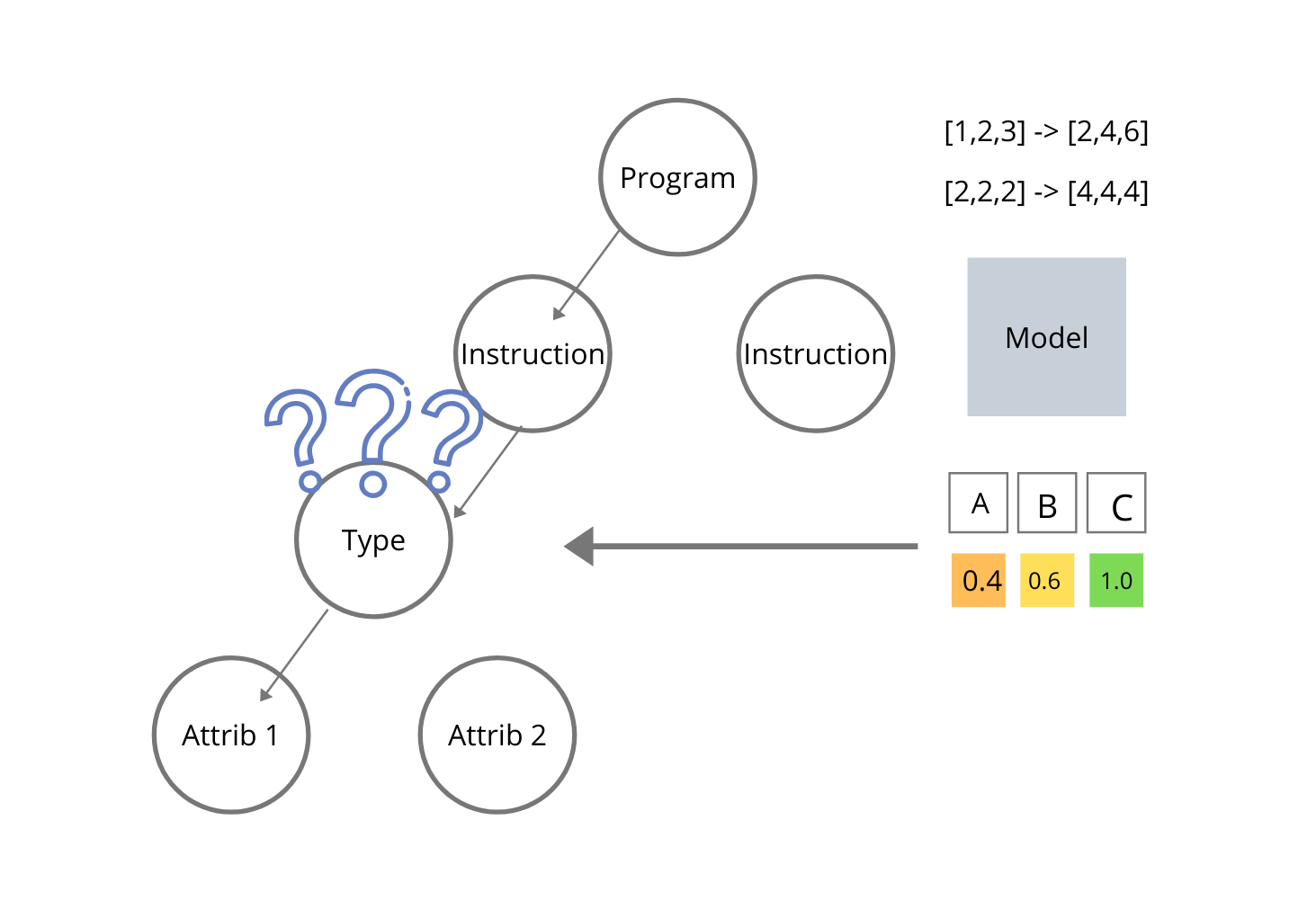
Idea: Use inference power of deep learning models to speed up search of target program. The target program is supposed to satisfy a list of input-output pairs.
Walkthrough:
- specify domain specific language
- encoding input-output pairs (multi-label multi-class problem, probability of attribute)
- map input/output pairs to program attributes
- narrow program search using predicted program attributes
- program search through DFS on a grammar
| Problem Samples | Program Attributes |
|---|---|
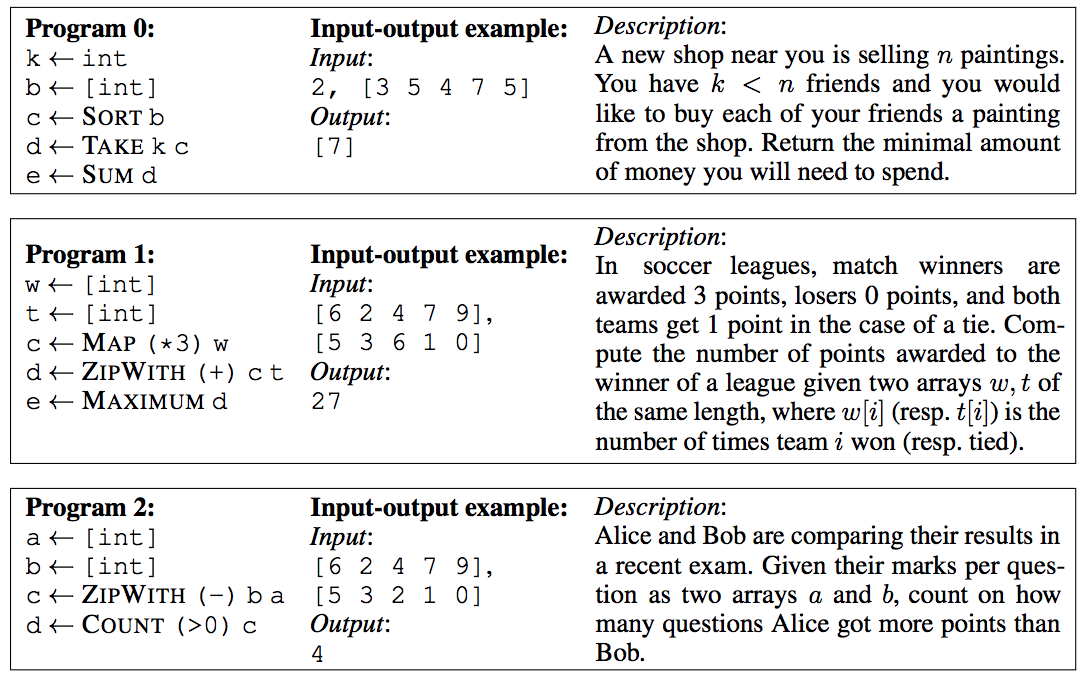 |
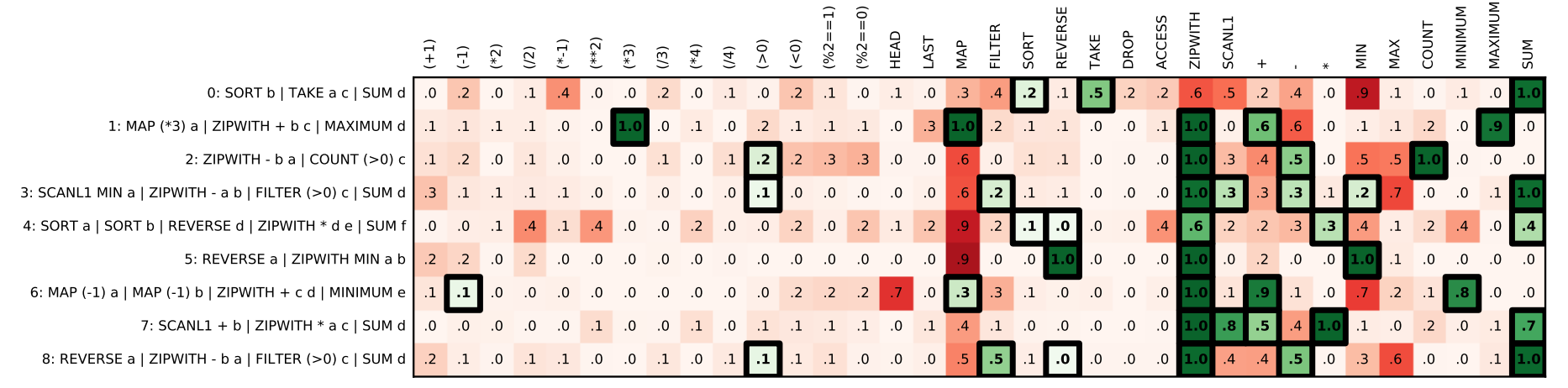 |
| Problem Samples | Program Attributes |
Link: https://arxiv.org/pdf/1705.07962.pdf
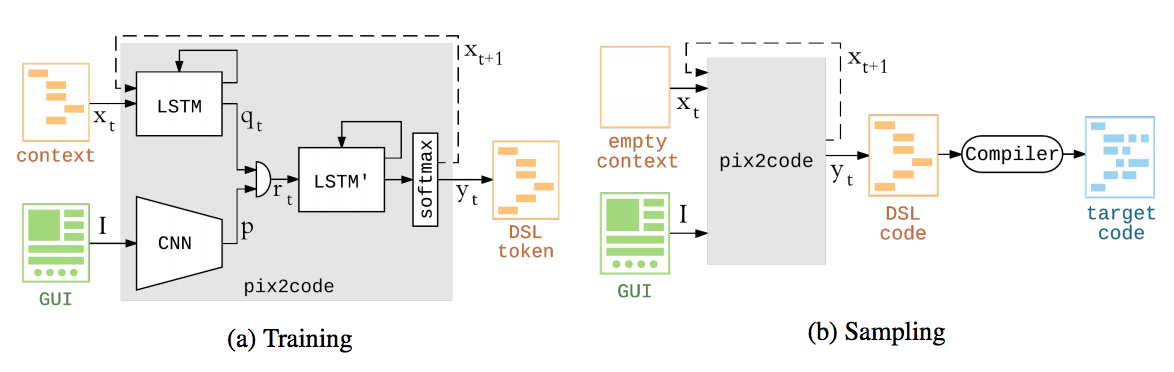
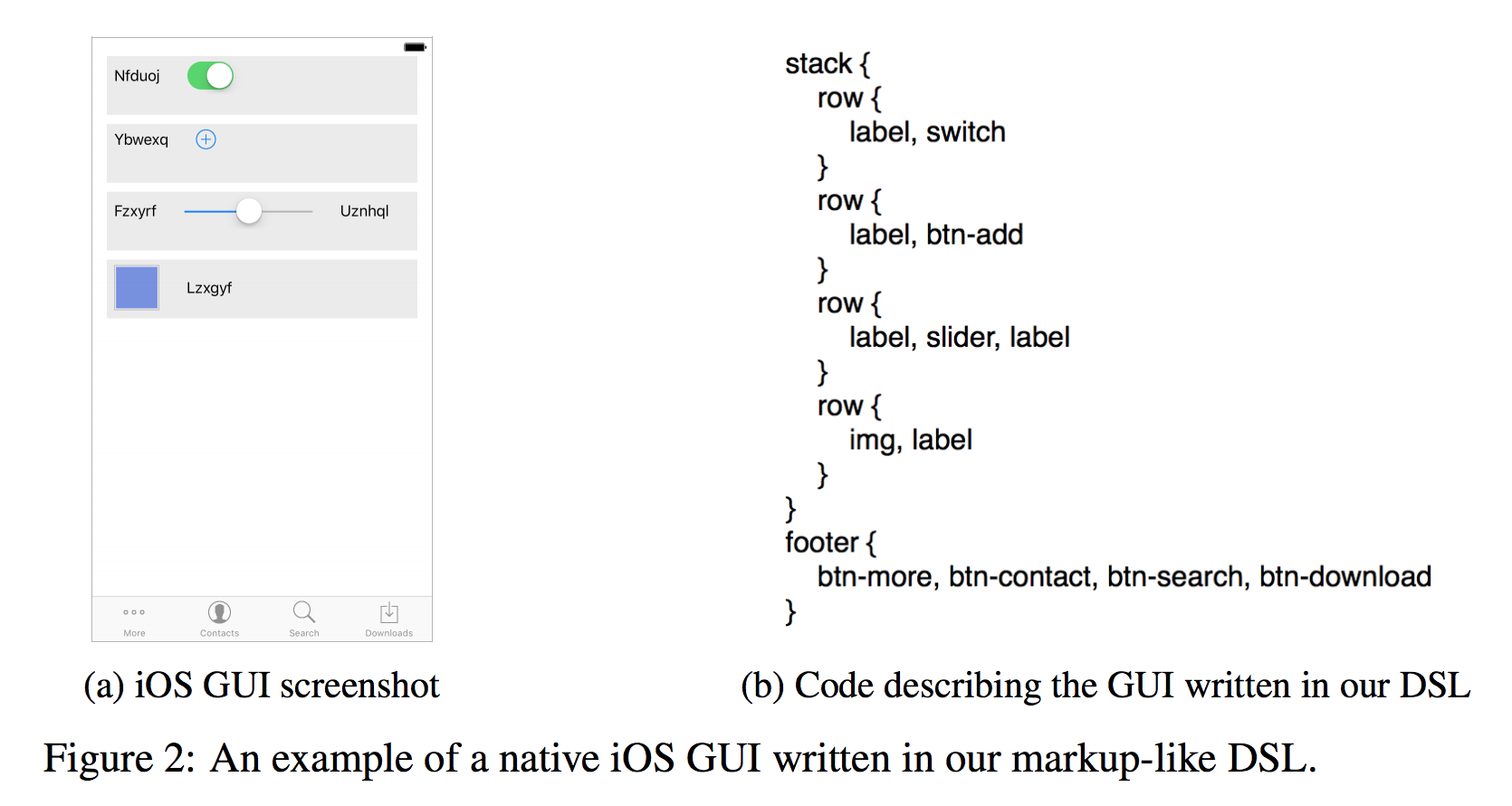
Idea: Learn to map graphical user interfaces to the code that generates them. This is done through a domain specific language and a compiler.
Walkthrough:
- encoder LSTM
- encoder CNN
- decoder LSTM
- end-to-end learning
down to here we have a total of 1 hour and a half
- Finding meaningful program representations which can be learned statistically
- Embedding together different types of representations
- Modelling the cognitive patterns which enable code generation
Solving problems in physics: https://arxiv.org/abs/1910.07291 Solving graph problems: https://www.gwern.net/docs/rl/2016-graves.pdf