Nishant Manchanda · March 2026
There's a new AI coding agent every week. Most benchmarks compare them on vibes. I wanted something more controlled: give multiple agent combinations the same spec, same language, same machine, and compare the output code systematically.
I picked three multi-agent orchestrators (Superpowers, DeerFlow 2.0, Squad) and three spec-driven toolkits (GSD, Spec Kit, OpenSpec), producing a 3x3 matrix of nine implementations. The task: a terminal Snake game in Python curses, from a shared spec.
Then I had an LLM judge score each implementation across five dimensions.
The results surprised me. The "best architecture" had a bug. The simplest approach swept the top three spots. And the spec toolkit shaped the code structure more than the orchestrator did.
Repo: github.com/nimanch/multi-agent-benchmark
Before getting into results, here's what each tool actually does. These aren't interchangeable — they solve fundamentally different problems.
Superpowers (github.com/obra/superpowers, 94K+ stars) is a subagent-driven development framework. When you give it a task, it doesn't just generate code — it dispatches specialized subagents in parallel. A planning agent breaks the problem down. Implementation agents write code concurrently. Then a two-stage review process kicks in: first a spec-compliance check (does the code match the requirements?), then a code-quality review (is the code well-structured?). Superpowers uses a skill-based architecture where agents have defined capabilities and constraints. It ran natively in this experiment — the only orchestrator that did.
DeerFlow 2.0 (github.com/bytedance/deer-flow, ByteDance) follows a Research → Plan → Code → Review pipeline. What distinguishes it is the research phase: before any code is written, a research agent examines best practices, common patterns, and potential pitfalls for the task at hand. This front-loaded research gets passed to the coding agent as context. DeerFlow also maintains sub-agent memory across tasks within a session, so later tasks can reference decisions made in earlier ones. DeerFlow ran natively using the embedded Python client (DeerFlowClient) with GitHub Models API (gpt-4o) as the LLM backend, after installing Python 3.12 via pyenv on the ARM64 test machine.
Squad (github.com/bradygaster/squad, v0.8.25) is a fundamentally different kind of tool. It's a team management layer for GitHub Copilot that creates persistent specialist roles — frontend developer, backend developer, tester, team lead — stored in .squad/ directories within your project. Each role has custom instructions that Copilot reads when working on tasks assigned to that specialist. Squad is designed for ongoing GitHub Issues and PR workflows: you assign an issue to the "backend" specialist, and Copilot picks up that role's context and constraints.
This matters for interpreting the results. We installed Squad v0.8.25, ran squad init to generate the team structure, but discovered that --agent squad doesn't register as a Copilot agent in the way you'd expect. The Squad experiments in this benchmark were effectively single-agent Copilot sessions where Copilot had access to Squad's .squad/ context files (role definitions, project conventions). No multi-agent orchestration occurred. Squad is built for persistent team coordination across many PRs over time, not single-prompt code generation from a spec. Comparing it head-to-head with Superpowers or DeerFlow as an "orchestrator" is somewhat apples-to-oranges.
GSD (Get Shit Done) (github.com/gsd-build/get-shit-done, 35K+ stars) takes a milestone/phase approach to project management for AI agents. Its philosophy is shipping fast with accountability. You run new-project to scaffold milestones from a spec, then execute-phase to have an agent work through each phase, then verify-phase to check the output. Each phase gets a fresh context window, which prevents context pollution across tasks. GSD enforces atomic git commits per phase, creating a clear audit trail. The fresh-context-per-phase pattern may explain why GSD variants consistently handled edge cases like terminal size checks — each phase is independently verified against the spec.
Spec Kit (github.com/github/spec-kit, 72.7K stars) is GitHub's approach to spec-driven development. It generates structured requirement documents: feature scenarios (given/when/then), acceptance criteria, and architectural specifications. These documents are designed to be consumed by AI agents as context. Spec Kit emphasizes separation of concerns — the spec describes what, not how — and produces documents that read like detailed product requirements. In practice, this led agents to build more elaborate class hierarchies and typed interfaces, mirroring the structured nature of the specs themselves.
OpenSpec (github.com/Fission-AI/openspec) is the most lightweight of the three. Its workflow is plan → apply → archive: generate a plan.md with task breakdowns, apply the plan to produce code, then archive the completed plan. Minimal ceremony, minimal scaffolding. The task breakdowns in plan.md files tend to be flat lists rather than hierarchical milestones, which gives agents more freedom in how they organize the code. This freedom showed in the results — OpenSpec variants had the most diverse architectures across the three orchestrators.
Understanding the artifacts each toolkit produces explains why the resulting code architectures differ so much. Here's what agents actually receive as input.
GSD creates a hierarchical planning structure with milestones, phases, and wave-based execution plans. Each phase gets a dedicated directory with detailed plan files:
.planning/
├── ROADMAP.md          # Milestones and phase overview
├── STATE.md            # Current progress tracking
└── phases/
    └── 01-core-game/
        ├── 01-01-PLAN.md   # Wave 1: setup + snake
        └── 01-02-PLAN.md   # Wave 2: food + scoring
Each plan file is a frontmatter-rich executable spec with dependency tracking, file manifests, and verification criteria:
---
phase: 01-core-game
plan: 01
wave: 1
depends_on: []
files_modified: [snake.py]
must_haves:
  truths: ["Snake moves continuously", "Arrow keys change direction"]
  artifacts: ["snake.py"]
---
GSD also registers specialized agent types (gsd-executor, gsd-verifier, gsd-planner) that the orchestrator dispatches as subagents. This structured decomposition tends to produce modular code with clear separation of concerns.
Spec Kit generates structured requirement documents with feature scenarios and acceptance criteria:
# Feature: Terminal Snake Game

## Summary
A terminal-based Snake game in Python using curses.

## Requirements
- Snake moves continuously, arrow keys change direction
- Cannot reverse direction
- Food spawns randomly as `*`, snake body `█`, head `O`
- Score +10 per food, displayed at top
- Wall and self collision = game over
- Game over screen with final score, 'q' quit, 'r' restart

## Acceptance Criteria
See SPEC.md for full criteria list.
The structured requirements format — closer to a product spec than a task list — led agents to build more elaborate class hierarchies with typed interfaces and clear abstractions.
OpenSpec produces a flat plan.md with goal and task breakdowns:
# Plan: Terminal Snake Game

## Goal
Build a terminal Snake game in Python curses as a single file (snake.py).

## Tasks
1. Set up curses window with border
2. Initialize snake (position, direction, body list)
3. Implement game loop with 100ms tick
4. Handle arrow key input, prevent reverse
5. Move snake, check wall/self collision
6. Spawn food randomly, detect eating
7. Track and display score
8. Implement game over screen with restart
Minimal ceremony — just a flat task list. This gives agents maximum freedom in code organization, which produced the most architecturally diverse results across orchestrators.
Squad adds its own layer: a team.md defining specialist roles and a routing.md controlling work distribution:
# Squad Team
## Members
| Name | Role | Charter |
|------|------|---------|
| Squad | Coordinator | Routes work, enforces handoffs |

## Work Routing
| Work Type | Route To |
|-----------|----------|
| Code review | Reviewer |
| Testing | Tester |
| Async issues | @copilot 🤖 |
Squad's team structure means work gets routed through specialist roles even before reaching the spec toolkit, adding an organizational layer that influenced code quality and structure.
Superpowers uses a skill-based approach where different skills activate at different stages: writing-plans for plan creation, subagent-driven-development for execution (dispatching fresh subagents per task with two-stage review), and verification-before-completion enforcing evidence-based completion claims. Each skill has its own SKILL.md with detailed process definitions.
DeerFlow uses a config.yaml defining the model, tool groups, and sandbox:
models:
  - name: gpt-4o
    use: langchain_openai:ChatOpenAI
    base_url: https://models.inference.ai.azure.com
tool_groups: [web, file:read, file:write, bash]
sandbox:
  use: deerflow.sandbox.local:LocalSandboxProvider
Its research-oriented pipeline (planner → researcher → coder → reviewer) runs as a LangGraph workflow, with the config controlling model routing and tool access.
What was controlled:
- Identical spec (SNAKE_SPEC.md) — 16 acceptance criteria covering movement, collision, scoring, display, and restart
- Same language: Python 3.x with curses (stdlib only)
- Same machine: NVIDIA Jetson ARM64, 8GB RAM, Ubuntu
- Single-file implementations, zero manual interventions on any of the nine
What was NOT controlled — and this matters:
-
Superpowers ran natively as a fully multi-agent system. Subagents were dispatched, parallel work occurred, two-stage review happened automatically.
-
DeerFlow 2.0 ran natively using the embedded Python client (
DeerFlowClient.chat()) with GitHub Models API (gpt-4o) as the LLM backend. Python 3.12 was installed via pyenv on the ARM64 Jetson. Each experiment was a singleclient.chat()call with a methodology-specific prompt referencing the spec. DeerFlow orchestrates sub-agents, memory, and tools internally. -
Squad was installed as the actual CLI (v0.8.25). We ran
squad initto generate the.squad/team structure with specialist roles and project conventions. Copilot then generated code with Squad's context files available in the working directory. Squad is designed for persistent team roles across GitHub Issues and PR workflows — its value proposition is coordination over many tasks over time, not single-prompt generation from a spec.
All three tools were installed and used as designed. The key difference is what "multi-agent" means for each: Superpowers dispatches parallel subagents, DeerFlow pipelines through specialized stages, and Squad provides persistent team context that shapes how Copilot approaches tasks.
Evaluation: An LLM judge (not me) scored each implementation 1-5 on five dimensions: Spec Compliance, Correctness, Code Quality, Completeness, and Robustness. I reviewed the scores against the code and agreed with most of them, though the evaluation has its own limitations (discussed below).
| Implementation | Spec Compliance | Correctness | Code Quality | Completeness | Robustness | Total |
|---|---|---|---|---|---|---|
| squad-gsd | 5 | 4 | 4 | 4 | 4 | 21 |
| squad-openspec | 5 | 4 | 4 | 4 | 4 | 21 |
| superpowers-gsd | 5 | 4 | 4 | 4 | 3 | 20 |
| superpowers-speckit | 4 | 3 | 5 | 4 | 3 | 19 |
| deerflow-gsd | 5 | 4 | 3 | 3 | 3 | 18 |
| deerflow-speckit | 5 | 4 | 3 | 3 | 3 | 18 |
| superpowers-openspec | 4 | 4 | 4 | 3 | 2 | 17 |
| deerflow-openspec | 4 | 4 | 4 | 3 | 2 | 17 |
| squad-speckit | 4 | 3 | 4 | 4 | 2 | 17 |
GSD swept the top three positions. Every orchestrator paired with GSD outscored or matched the same orchestrator paired with either alternative toolkit. squad-gsd and squad-openspec tied for first at 21/25; superpowers-gsd came in third at 20.
squad-openspec remains the notable outlier — the only non-GSD implementation to crack the top two, scoring 21/25 with an interactive terminal-size resize loop and smart self-collision handling.
Not all "pass" results are equal. The LLM judge checked 16 specific requirements:
| Requirement | SP-GSD | SP-SK | SP-OS | DF-GSD | DF-SK | DF-OS | SQ-GSD | SQ-SK | SQ-OS |
|---|---|---|---|---|---|---|---|---|---|
| Continuous movement | ✅ | ✅ | ✅ | ✅ | ✅ | ✅ | ✅ | ✅ | ✅ |
| Arrow key controls | ✅ | ✅ | ✅ | ✅ | ✅ | ✅ | ✅ | ✅ | ✅ |
| No reverse direction | ✅ | ✅ | ✅ | ✅ | ✅ | ✅ | ✅ | ✅ | ✅ |
| Random food spawn | ✅ | ✅ | ✅ | ✅ | ✅ | ✅ | ✅ | ✅ | ✅ |
Food as * |
✅ | ✅ | ✅ | ✅ | ✅ | ✅ | ✅ | ✅ | ✅ |
Head=O, Body=█ |
✅ | ✅ | ✅ | ✅ | ✅ | ✅ | ✅ | ✅ | ✅ |
| Score +10, displayed | ✅ | ✅ | ✅ | ✅ | ✅ | ✅ | ✅ | ✅ | ✅ |
| Snake grows on eat | ✅ | ✅ | ✅ | ✅ | ✅ | ✅ | ✅ | ||
| Wall collision = death | ✅ | ✅ | ✅ | ✅ | ✅ | ✅ | ✅ | ✅ | ✅ |
| Self collision = death | ✅ | ✅ | ✅ | ✅ | ✅ | ✅ | ✅ | ✅ | ✅ |
| Border around play area | ✅ | ✅ | ✅ | ✅ | ✅ | ✅ | ✅ | ✅ | ✅ |
| Game over screen | ✅ | ✅ | ✅ | ✅ | ✅ | ✅ | ✅ | ✅ | ✅ |
| Final score shown | ✅ | ✅ | ✅ | ✅ | ✅ | ✅ | ✅ | ✅ | ✅ |
| q=quit, r=restart | ✅ | ✅ | ✅ | ✅ | ✅ | ✅ | ✅ | ✅ | ✅ |
| 100ms tick | ✅ | ✅ | ✅ | ✅ | ✅ | ✅ | ✅ | ✅ | ✅ |
| Min terminal 20x10 | ✅ | ❌ | ✅ | ❌ | ❌ | ✅ | ❌ | ✅ |
Two things jump out:
- Only 4 of 9 implementations checked minimum terminal size — three GSD variants plus squad-openspec. This is a clear spec requirement that 5 implementations simply ignored.
- Two implementations (superpowers-speckit, squad-speckit) have a grow-timing bug where the snake doesn't visually grow until one frame after eating. More on this below.
The spec says "the snake grows by one segment each time it eats food." Two implementations (superpowers-speckit and squad-speckit) get this subtly wrong due to an architectural choice.
Here's the pattern that causes the bug — from superpowers-speckit:
# Game loop (simplified):
snake.move()                    # advance first
if snake.head == food.position:
    snake.grow()                # sets grow_pending = True
    food.respawn(...)

# Inside Snake.move():
def move(self):
    new_head = (self.head[0] + dy, self.head[1] + dx)
    self.body.insert(0, new_head)
    if not self.grow_pending:   # checked BEFORE grow() is called this tick
        self.body.pop()
    else:
        self.grow_pending = False
The problem: move() executes before the food check. So when the snake eats food, grow_pending is still False during that tick's move(). The tail gets popped. grow() then sets grow_pending = True, which takes effect on the next tick. The snake still grows by exactly one segment — but there's a one-frame visual glitch where the food disappears before the snake visually extends.
Compare with the pattern used by 7 of 9 implementations (here from deerflow-gsd):
def move_snake(snake, direction, food):
    new_head = (head_y + dy, head_x + dx)
    new_snake = [new_head] + snake[:]
    ate = new_head == food
    if not ate:
        new_snake.pop()         # grow decision is immediate
    return new_snake, ate
Insert head, then conditionally pop tail. No deferred flag, no timing issue. The simpler pattern is the correct one.
This is the most interesting result from the evaluation: the implementation with the best architecture score (superpowers-speckit: Code Quality 5/5, five clean OOP classes) had a functional bug. The procedural implementations with no classes got the behavior right.
The deerflow-openspec implementation built an event-driven architecture with an EventBus class:
class EventBus:
    def on(self, event, handler):
        self._handlers.setdefault(event, []).append(handler)
    def emit(self, event, **kwargs):
        for h in self._handlers.get(event, []):
            h(**kwargs)
Events are emitted throughout the game — EVT_MOVE, EVT_EAT, EVT_DIE. But bus.on() is never called anywhere. Zero subscribers. The events fire into the void.
The evaluator called this "architecture astronautics," which is fair. The game works fine — the EventBus just doesn't do anything. It's the code equivalent of installing a fire alarm system and never connecting the sirens.
One redeeming quality: deerflow-openspec is the only implementation that uses collections.deque for the snake body, giving O(1) head insertion vs O(n) for list insert(0, ...). For a 20x10 terminal it doesn't matter, but it's the technically correct data structure.
| Implementation | LOC | Architecture |
|---|---|---|
| deerflow-gsd | 91 | Bare procedural |
| deerflow-speckit | 110 | Procedural (despite Spec Kit) |
| deerflow-openspec | 131 | OOP (SnakeGame class) |
| squad-gsd | 132 | Clean procedural |
| superpowers-gsd | 178 | Procedural with constants |
| superpowers-openspec | 179 | Functional + dataclass |
| squad-speckit | 180 | Protocol pattern + Position class |
| squad-openspec | 203 | Dict-state, pure functions |
| superpowers-speckit | 213 | OOP (5 classes) |
The native DeerFlow outputs are the shortest — 91 to 131 lines. squad-gsd's 132 lines scored 21/25 (tied first). superpowers-speckit's 213 lines scored 19/25 (with a bug). More code correlated with more architectural ambition, which correlated with more opportunities for bugs — except when the extra code was defensive rather than structural.
The spec toolkit shaped architecture:
- GSD → procedural, pragmatic, "just make it work"
- Spec Kit → OOP, typed, separated concerns, more elaborate class hierarchies
- OpenSpec → functional, state-as-data, testable pure functions
The orchestrator shaped completeness and robustness:
- All three GSD variants checked terminal size. Of the non-GSD variants, only squad-openspec did.
- Superpowers consistently produced more polished rendering (manual Unicode box-drawing borders)
- Native DeerFlow produced notably compact code: both GSD and Spec Kit yielded procedural implementations, while OpenSpec prompted DeerFlow to use a class-based approach.
The interaction between them is what mattered. GSD's milestone-based approach apparently forced all three orchestrators to handle edge cases (terminal size) that the other toolkits didn't prompt for. The spec explicitly says "Minimum terminal size: 20x10" — GSD treated this as a requirement; Spec Kit and OpenSpec (with the exception of squad-openspec) apparently didn't surface it as a first-class acceptance criterion.
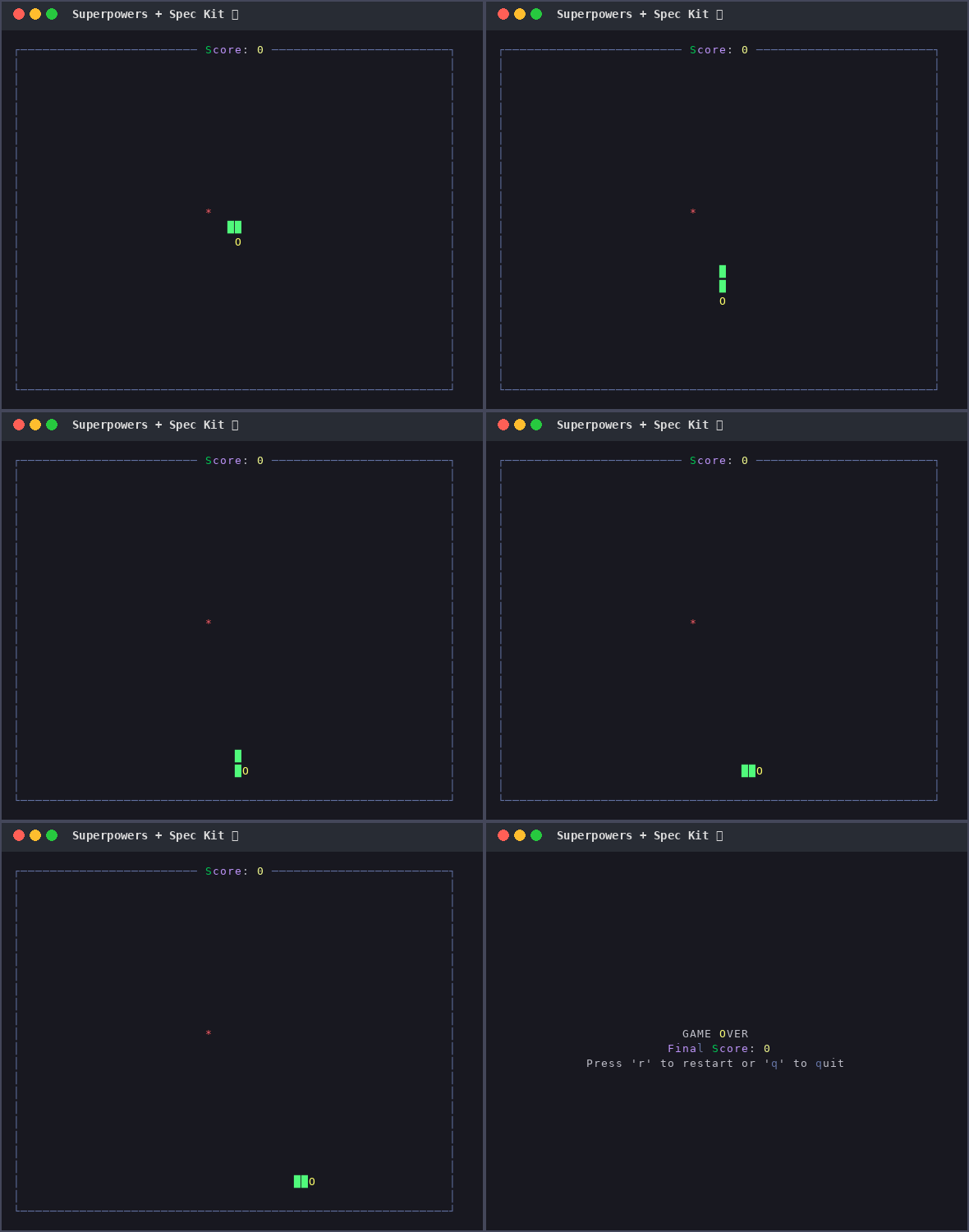
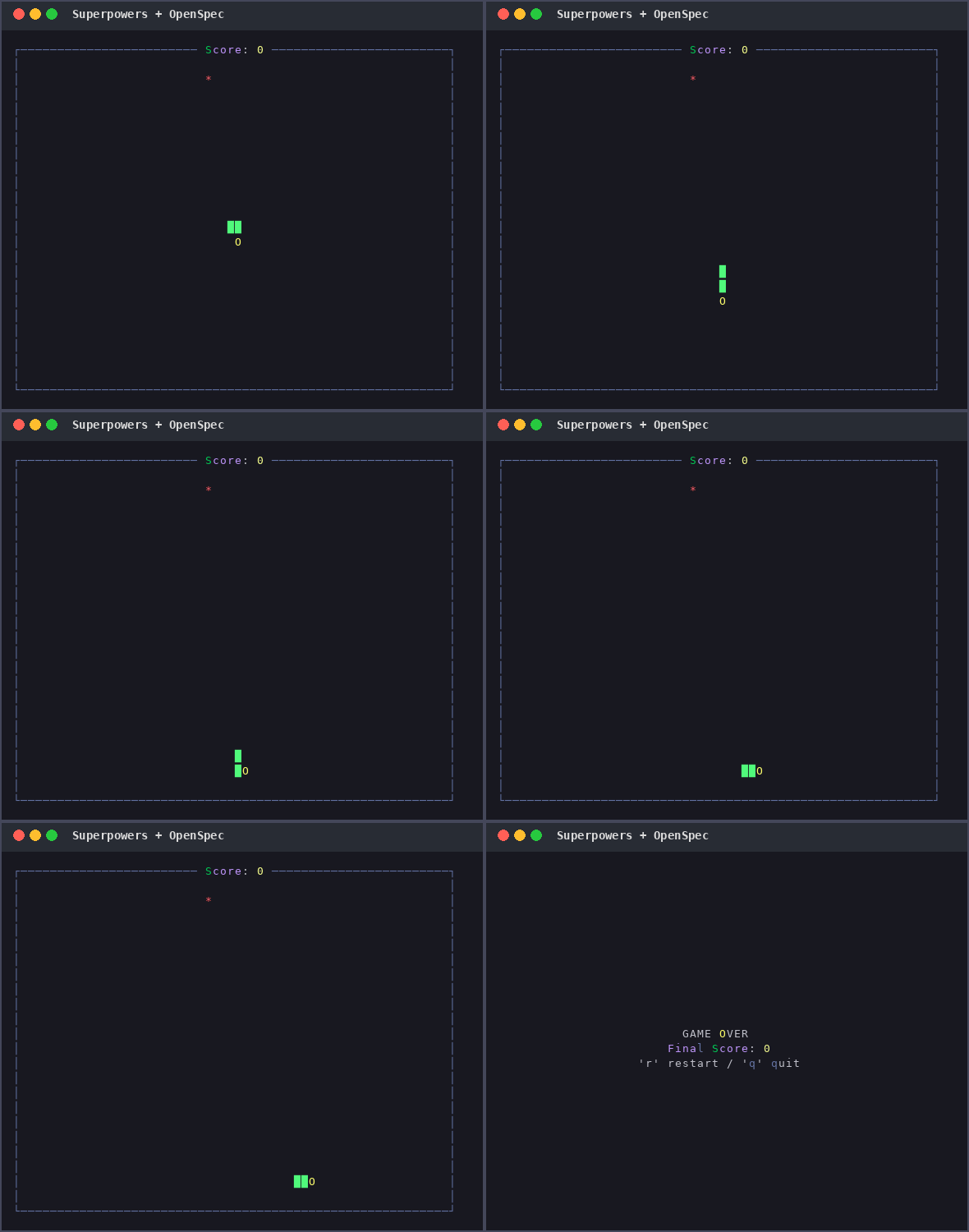
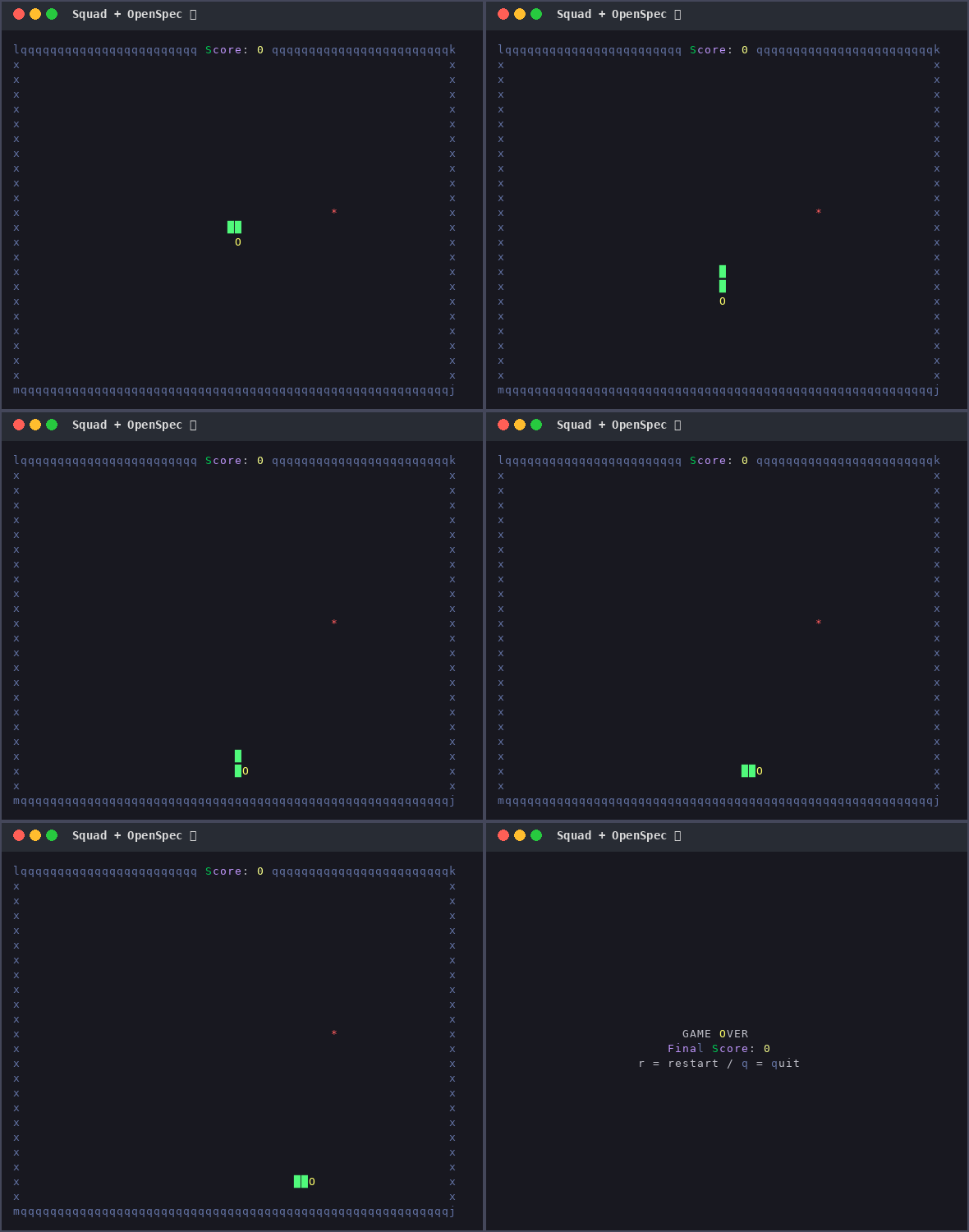
All nine games running:
| GSD | Spec Kit | OpenSpec | |
|---|---|---|---|
| Superpowers | 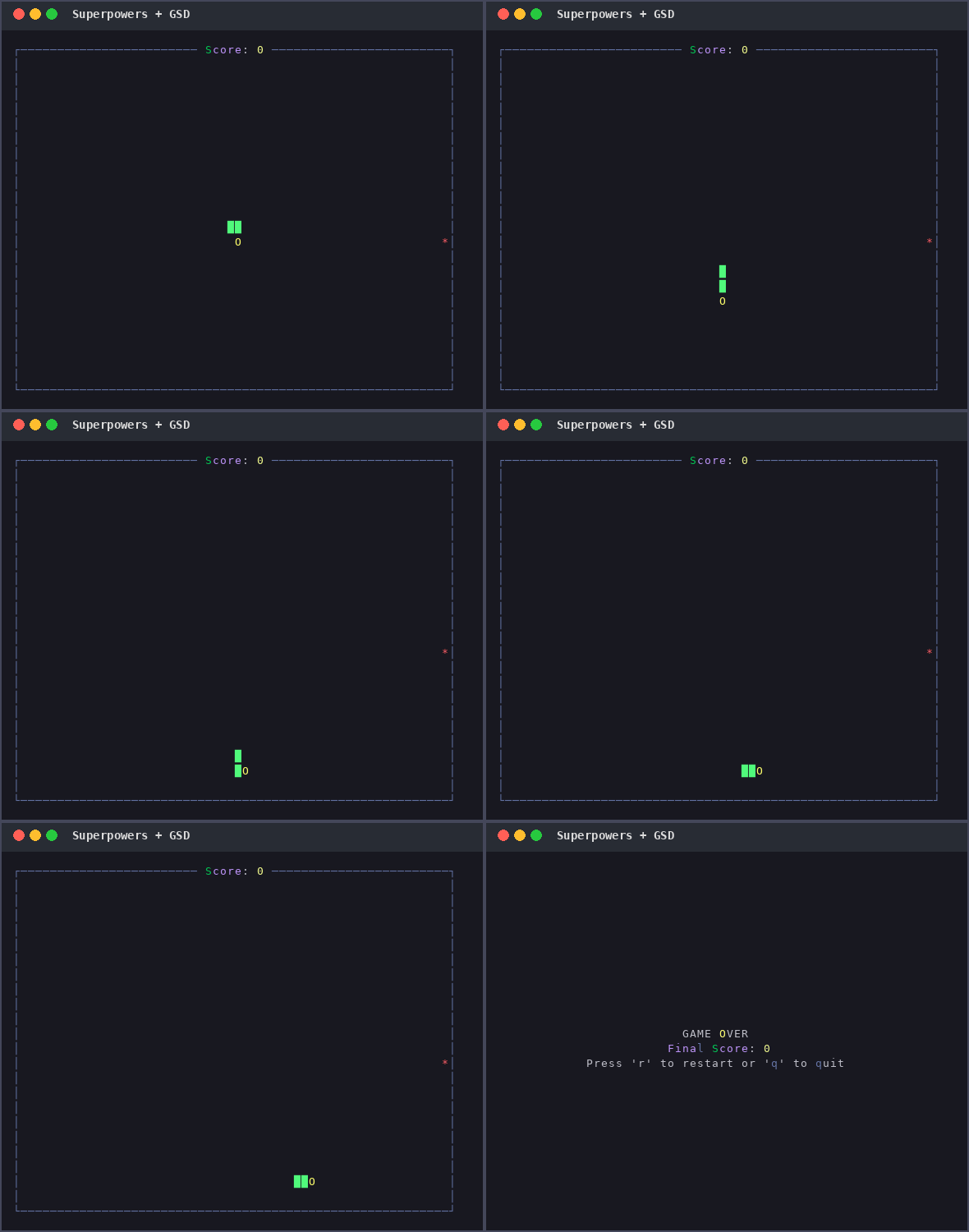 |
 |
 |
| DeerFlow | 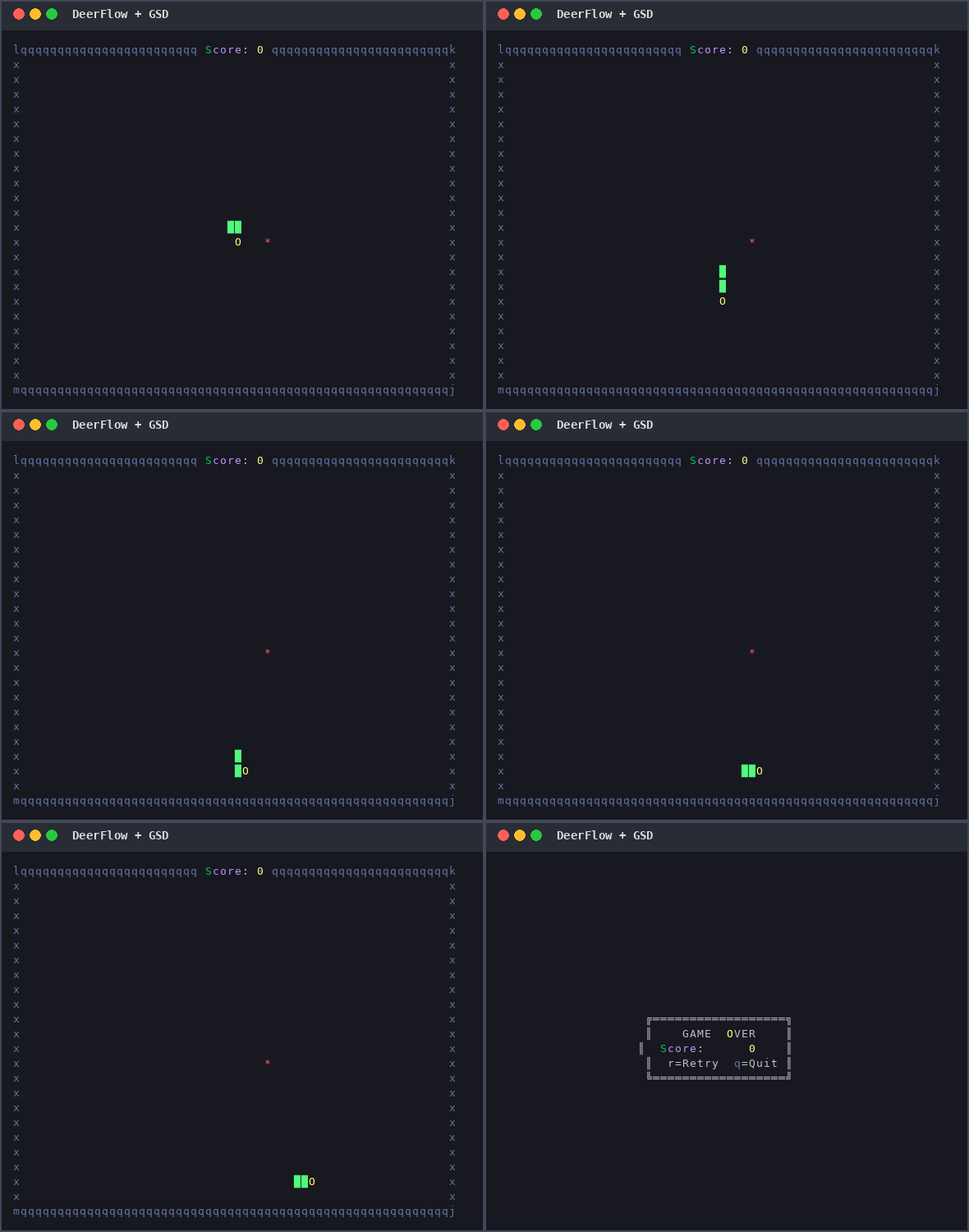 |
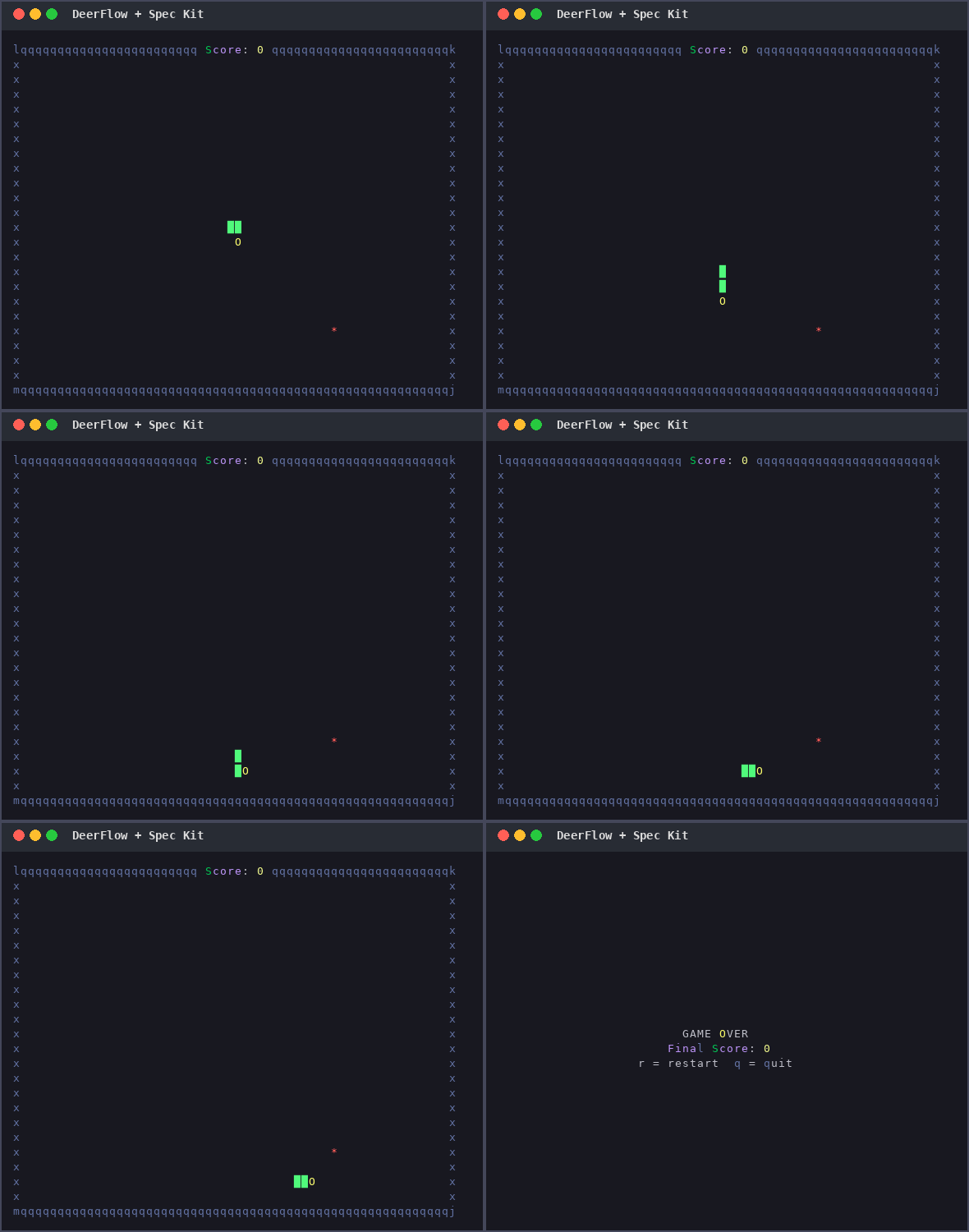 |
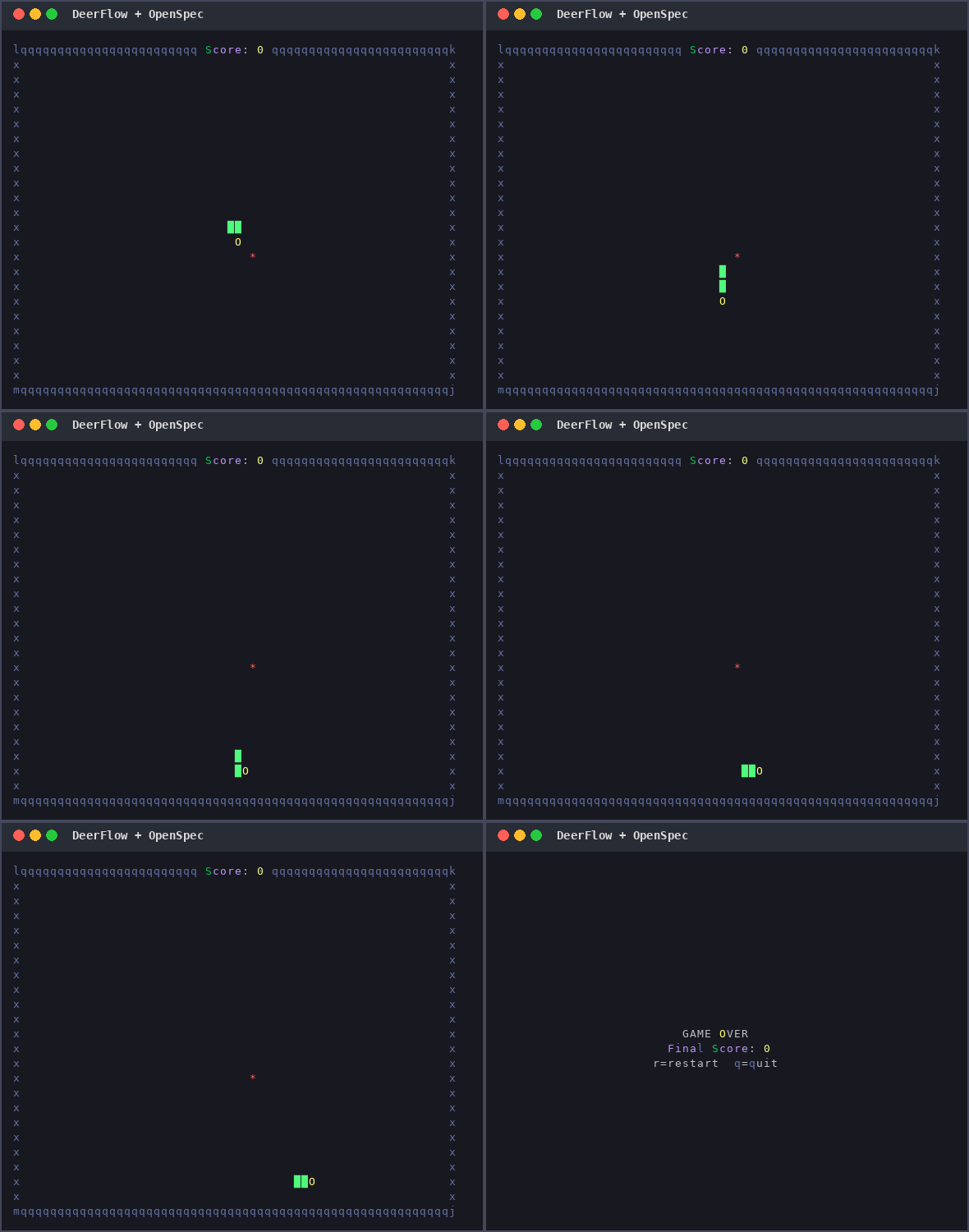 |
| Squad | 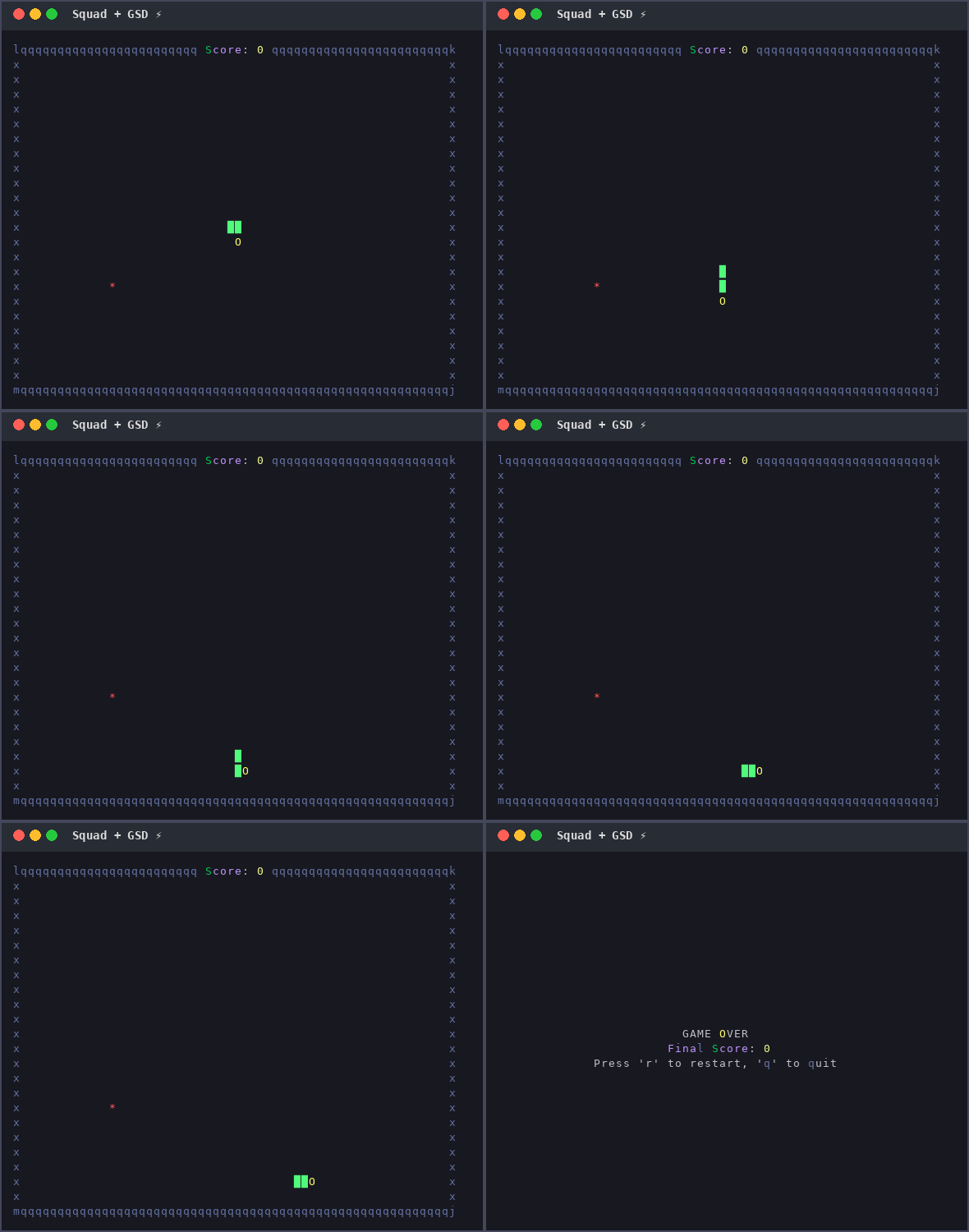 |
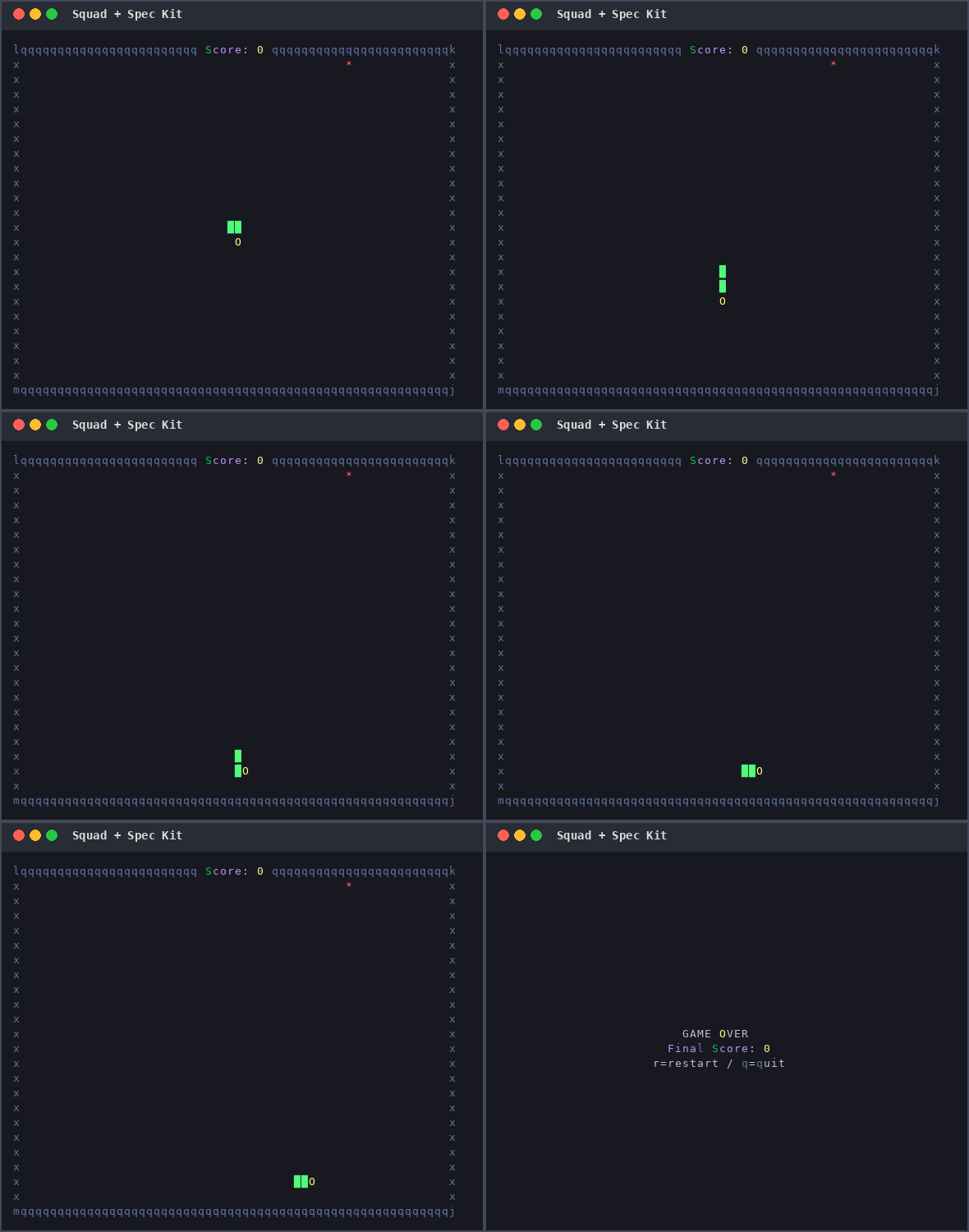 |
 |
This evaluation has real weaknesses:
Snake is too easy. All nine implementations work. The interesting differences are in edge cases (terminal size, grow timing) and code style — not in whether the agents could solve the problem. A harder task (multi-file, networking, database) would produce more differentiation.
All three orchestrators ran with their actual tools. Superpowers dispatched subagents natively. DeerFlow ran through its embedded client. Squad provided team context via .squad/ directories. The tools are designed for different workflows — Superpowers for parallel subagent dispatch, DeerFlow for staged pipelines, Squad for persistent team coordination — so the comparison is inherently asymmetric.
N=1 per combination. I ran each combination once. LLM outputs are stochastic. Running each combination five times and averaging would be more rigorous. The scores could shift by a few points on re-runs.
LLM-as-judge. The evaluation was done by an LLM, not by running a test suite. The grow-timing bug was caught by code inspection, not automated testing. A proper evaluation would include functional tests that exercise each acceptance criterion programmatically.
Scoring granularity. 1-5 integer scores across five dimensions give a 5-25 range. The actual spread was 17-21, a 4-point range across 9 implementations. The top-3 vs bottom-6 distinction is clearer than individual rankings.
Three data-driven takeaways:
-
GSD's spec compliance advantage was decisive. All three GSD variants scored 5/5 on spec compliance and checked terminal size. The toolkit's milestone-based approach — fresh context per phase, explicit verification steps — appears to enforce spec requirements more reliably than scenario-based (Spec Kit) or task-based (OpenSpec) approaches. squad-gsd and squad-openspec tied at 21/25; superpowers-gsd scored 20. At least for this spec, GSD's "verify each phase" pattern caught requirements that other toolkits missed.
-
Architectural ambition correlated negatively with correctness. The two implementations with the most classes (superpowers-speckit: 5 classes, squad-speckit: Position + Protocol + entities) both had the grow-timing bug (Correctness: 3/5 each). The top scorers (21, 21, 20) were all procedural or simple functional code. squad-openspec (21/25) is instructive: its 203 lines are longer than average, but the extra code is defensive (try/except, resize loop) rather than structural (classes, protocols).
-
DeerFlow favored simplicity over architecture. DeerFlow's pipeline produced the shortest implementations (91-131 LOC), opting for direct procedural code over elaborate class hierarchies. This is interesting because DeerFlow's documented architecture (research → plan → code → review) suggests it would produce more considered designs. In practice, the research and review stages may have encouraged simplicity — identifying that a Snake game doesn't need an EventBus or five classes. Whether this holds for more complex tasks is an open question.
Whether this generalizes beyond Snake — beyond a well-understood, small, single-file problem — is an open question.
Nishant Manchanda builds things in Seattle.
All code and evaluation data: github.com/nimanch/multi-agent-benchmark
Orchestrators:
- Superpowers — Subagent-driven development framework with two-stage review (94K+ stars)
- DeerFlow 2.0 — ByteDance's Research → Plan → Code → Review pipeline
- Squad — Team management layer for GitHub Copilot with persistent specialist roles (v0.8.25)
Spec Toolkits:
- GSD (Get Shit Done) — Milestone/phase project management with fresh context windows (35K+ stars)
- Spec Kit — GitHub's spec-driven development with feature scenarios and acceptance criteria (72.7K stars)
- OpenSpec — Lightweight plan → apply → archive workflow
Evaluation:
- SNAKE_SPEC.md — Shared spec used across all 9 experiments
- EVALUATION.md — Full LLM-as-Judge scoring with per-implementation analysis
- RESULTS.md — Raw benchmark results