翻了一下之前的日报,发现还没有人教如何手写OJ。那么捡漏走起
首先,这篇文章介绍如何一步步手写OJ。
也许你会问“为什么我们不直接配置HustOJ/UniversalOJ呢?”
下面我们了解一下配置现成OJ的缺点:
- 安装配置复杂(大多数需要安装mysql,而mysql对armhf平台有兼容性问题QAQ)
- 系统占用高 (树莓派和小型vps很难带动,更别提执行效率了)
- 不易上手(看代码试图查错会导致一脸懵逼)
为什么不在 洛谷 之类的OJ建立团队呢?
嗯...你不想看管理员脸色活着吧。
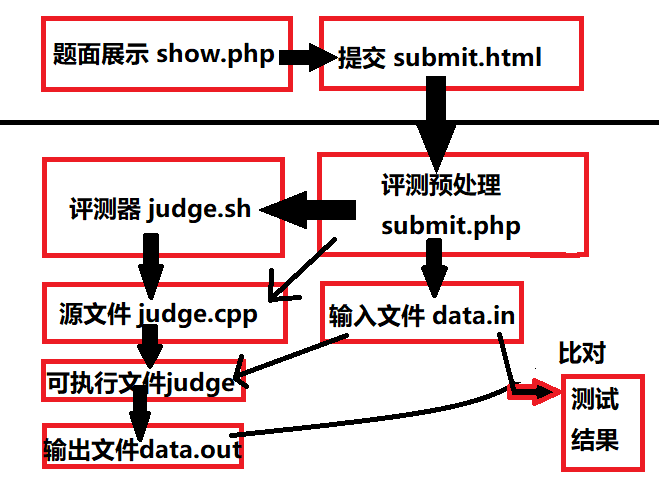
大概就是这样。
本项目在Codeanywhere上进行编写、调试。
Codeanywhere,一个在线PHP执行平台,速度快,功能强大。
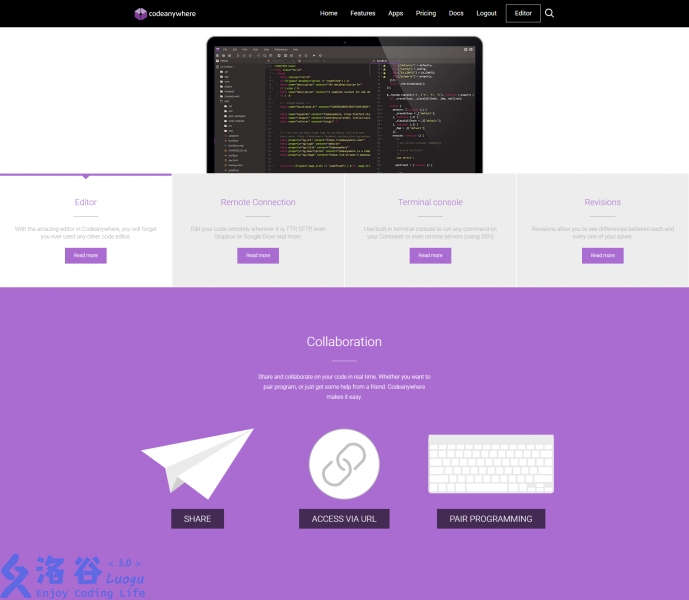
在codeanywhere注册一个账号,新建一个Project。
关于Codeanywhere的使用不再赘述,身为开发者多年的你一定会认为这个IDE简单有趣。
另外,后期我主要使用Codenvy,因为我把CodeAnywhere的账号密码忘掉了。
一下部分有完善的注释,直接阅读注释即可。
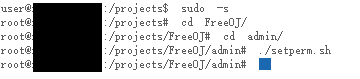
Day1全部代码下载
我们从评测部分写起。Day1的任务是实现一个简单的ide,类似洛谷IDE。
观察实现原理图,我们发现需要创建一下的文件:
- submit.html : submit.php的前端显示页面
- submit.php : 用于创建judge.cpp和data.in并在评测后返回结果
- judge.sh : 编译judge.cpp并进行测试,输出data.out
首先创建一个文件夹:judge,新建一个脚本:judge.sh,在新弹出的编辑器里写入
# judge.sh 类似对拍程序。
rm judge # 保险起见,删除上次的可执行文件。
g++ judge.cpp -O2 -o judge # 编译
./judge < data.in > data.out # 运行
记得chmod 755 judge.sh
然后是submit.php。先看submit.php的伪代码:
删除上次评测时的临时文件
写入judge.cpp和data.in
调用judge.sh编译
将data.out输出至网页
下面上代码。
<?php

$code = $_POST["code"];// 获取 代码
$input = $_POST["input"];//获取 输入

unlink ("judge"); //删除 judge,以下类推
unlink ("data.in");
unlink ("data.out");
unlink ("judge.cpp");

$file = fopen("judge.cpp","w+") or exit("Unable to Open CPP."); //将 代码 写入 judge.cpp
fwrite($file,$code);
fclose($file);

$fin = fopen("data.in","w+") or exit("Unable to Open Input"); //将 输入 写入 data.in
fwrite($fin,$input);
fclose($fin);

system("./judge.sh");//执行 judge.sh

$fout = fopen("data.out","r") or exit("Unable to Open File."); // 输出 data.out
while (!feof($fout)){
  echo fgets($fout);
}
fclose($fout);

?>
然后submit.html就极其简单易懂了。
<html>

<head>
  <title>Submit Your Code</title>
</head>

<body>
  <form action="submit.php" method="post">
    <textarea name="code" height="200px" width="80px"></textarea>
    <br>
    <textarea name="input" height="100px" width="40px"></textarea>
    <input type="submit">
  </form>
</body>

</html>
Day2全部代码下载
一个OJ只有IDE是不行的,还需要测试数据和题面展示。 测试数据的摆放方式是这样的:
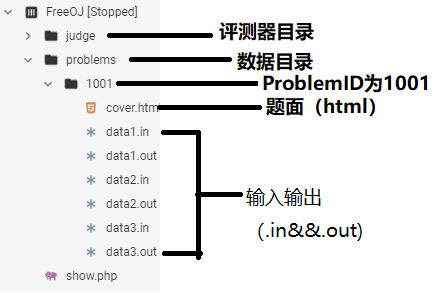
首先我们要修改/judge/submit.php,让它支持多组数据的评测。
<?php

function judge($code,$path){
  //echo $path;
  unlink ("judge");
  unlink ("data.in");
  unlink ("data.out");
  unlink ("judge.cpp");

  $file = fopen("judge.cpp","w+") or exit("Unable to Open CPP.");
  fwrite($file,$code);
  fclose($file);

  if (!is_file($path)) exit("Bad Problem ID!");

  copy($path,"./data.in");

  system("./judge.sh");

  $fout = fopen("data.out","r") or exit("Unable to Open File.");
  $ret = "";
  while (!feof($fout)){
    $ret = $ret . fgets($fout);
    //echo $ret;
  }
  fclose($fout);
  return $ret;
}

$code = $_POST["code"]; //代码
$pid = $_POST["pid"]; // ProblemID

$curj = 1;//初始化当前数据点编号
$p_fnt = "../problems/" . $pid . "/"; //生成数据目录相对路径

while (is_file($p_fnt . "data" . (string)($curj) . ".in")){//枚举数据点编号
  //echo $p_fnt . "data" . (string)($curj) . ".in";
  judge($code,$p_fnt . "data" . (string)($curj) . ".in");//评测当前测试点

  $file1 = md5_file("./data.out"); // 计算提交代码的输出的MD5
  $file2 = md5_file($p_fnt . "data" . (string)($curj) . ".out");//计算数据文件中输出的MD5

  if ($file1 == $file2) //比对
     echo "AC<br>";
  else
     echo "WA<br>";


  $curj = $curj + 1; //下一个测试点
}

?>
然后修改judge/submit.html(略,详见代码包)
收集任意一题的数据包(此处以A+B Problem为例),解压至problem/1001。
在problem/1001中新建题面文件cover.html,写入
<title>A+B Problem</title>
<h1>A+B Problem</h1>
<p>
  Please Caculate A+B.
  <br>
  Input:a,b:Integer
  <br>
  Output:a+b
</p>
写完了...不,没有。还有show.php呢。
show.php的访问格式为show.php?pid=[你要访问的ProblemID]
下面上代码:
<?php

$probid = $_GET["pid"]; //ProblemID
$cover = "./problems/" . $probid . "/cover.html"; //题面相对目录

if (!is_file($cover)) exit("Bad Problem ID!");//确认题面存在

$file = fopen($cover,"r") or exit("Bad Cover!");

echo "<h3>Problem id:" . (string)$probid . "</h3>";//输出PID

while (!feof($file)){
  echo fgets($file);//逐行输出题面
}

fclose($file);

echo "<a href=\"judge/submit.html\">Submit</a>"; //submit链接

?>
到Day2为止,一个基本的OJ就建成了。它拥有题面展示、评测功能。
Day3全部代码下载
首先优化了一下结果显示页,添上了测试点编号和颜色,详见代码包。
一个网站没有index.php怎么行呢?
我们简单的写一下index.php,让它可以显示所有题目。
<?php
// /index.php
exec("ls ./problems",$prbs); // 获取所有文件
$cur = [];
foreach ($prbs as $cur)
  echo "<a href=\"show.php?pid=" . $cur . "\">" . $cur . "</a>"; //逐个输出
?>
按理说这样这一节就写完了,然后我意识到,这样的话就没法判别TLE了。无法判别TLE会使试图卡暴力的毒瘤出题人不开心,所以我们要加入TLE的判别。
如何实现TLE的判别呢?我们选择使用linux的命令“timeout”
Usage:timeout time command [return_val]
好了,在了解语法后,我们创建一个/judge/judge.php,然后删除/judge/judge.sh,因为它已经光荣退役了。
下面上/judge/judge.php的代码:
<?php
function Do_judge($time_limit){ //进行评测
  unlink ("judge");
  unlink ("data.out");
  system("g++ judge.cpp -O2 -o judge"); //编译
  //echo "timeout " . (string)($time_limit) . " ./judge < data.in > data.out";
  $return_var = 0;
  system("timeout " . (string)($time_limit) . " ./judge < data.in > data.out",$return_var); //测试
  if ($return_var == 124) return false; else return true;
}
?>
然后修改/judge/submit.php
<?php
require ("judge.php"); //这里!

function judge($code,$path,$t_l){
  (略)
  return Do_judge($t_l); //这里! true:没TLE false:TLE

  //$fout = fopen("data.out","r") or exit("Unable to Open File.");
  //$ret = "";
  //while (!feof($fout)){
  //  $ret = $ret . fgets($fout);
    //echo $ret;
  //}
  //fclose($fout);
  //return $ret;
}
(略)

while (is_file($p_fnt . "data" . (string)($curj) . ".in")){
  //echo $p_fnt . "data" . (string)($curj) . ".in";
  echo "<h3>Test Case #" . (string)($curj) . ":</h3>";
  if (!judge($code,$p_fnt . "data" . (string)($curj) . ".in",1/*时限一秒*/))//这里!
    echo "<h3 style=\"background-color:#4169E1\">TLE</h3>";
  else{
  (略)
  }
(略)
}

?>
Day4全部代码下载
AC...WA...TLE(RE)...还差CE。如何判定CE呢?看看编译后有没有输出文件即可。
核心代码如下。
  (略)
  if (!file_exists("judge")){ ///没有输出judge
    return -1;
  }
  (略)
我们修改一下submit.php中显示答案的部分,让它兼容现有的judge.php。
<?php
(略)

function judge($code,$path,$t_l){
(略)
}
(略)
while (is_file($p_fnt . "data" . (string)($curj) . ".in")){
  echo "<h3>Test Case #" . (string)($curj) . ":</h3>";
  $j_stat = judge($code,$p_fnt . "data" . (string)($curj) . ".in",(int)(get_prb_time_limit($pid)));
  if ($j_stat == 0){
    echo "<h3 style=\"background-color:#4169E1\">TLE</h3>";
  }elseif ($j_stat == -1){
    echo "<h3 style=\"background-color:#FF4500\">CE</h3>";
  }elseif ($j_stat == 1){
	(略)
  }
(略)
}

?>
测试一下...可以判别CE了。
我们的代码里写着这样一行:
if (!judge($code,$p_fnt . "data" . (string)($curj) . ".in",1/*时限一秒*/))
可是,每题的时限怎么可能都是一秒呢?我们要想办法解决这个问题。
PHP有自带的保存数据的方式json,它简单有趣,可以通过json_encode函数解析成数组。
我们在/library/prbinfo.php中写入
<?php
//be called like 'require ("./library/prbinfo.php");'
function get_prb_info($pid){ //获取题目信息
    $file = fopen("../problems/" . (string)($pid) . "/attrib.json","r");
    $attr = fgets($file);
    return json_decode($attr,true);
}

function get_prb_name($pid){//获取题目名称
    $pinfo = get_prb_info($pid);
    return $pinfo["name"];
}

function get_prb_time_limit($pid){//获取题目时限
    $pinfo = get_prb_info($pid);
    return $pinfo["time_limit"];
}
?>
然后把那一行改成$j_stat = judge($code,$p_fnt . "data" . (string)($curj) . ".in",(int)(get_prb_time_limit($pid)));
别的文件也要进行适配修改,此处不再赘述。
我们还加入了setperm.sh和unperm.sh便于修复权限。此处不再赘述。
至此,我们已经凑齐了四种编译状态。
Day5全部代码下载
想象一下两个用户在你的OJ同时提交了代码,突然...
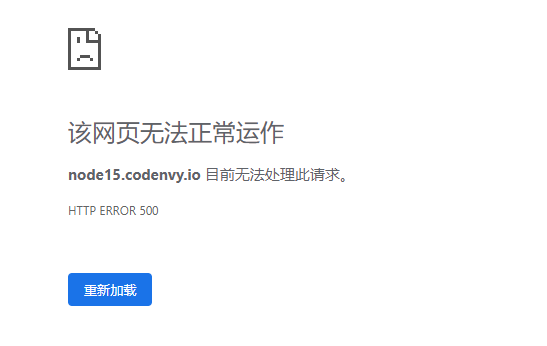
为什么呢?新来的judge.cpp把旧的覆盖了!
所以我们要实现评测队列。评测队列就相当于操作系统中的多任务,把每个评测都放到独立的容器中评测,互不干扰。
正常评测队列原理如下。
开一个Docker
把代码放进去跑
关闭该Docker
实现评测队列,其实就是把原来的judge.php,submit.php,submit.html三个核心评测文件单独复制到一个特殊的文件夹内进行评测。文件夹较docker轻量化,占用资源更少。其实只是docker咕了
我们把judge文件夹重命名为judge-module,作为评测机的模板。
将submit.php中的评测函数搬到judge.php中。
submit.php
<?php
require ("./judge.php"); //链接judge.php
$code = $_POST["code"];//代码
$pid = $_POST["pid"];//problem id

unlink("./submit.html");//删除submit.html
Result($code,$pid);//评测
unlink("./submit.php");//删除submit.php
header('location:' . dirname($_SERVER["PHP_SELF"]) . "/result.html");//跳转至result.html
?>是不是精简多了?但是judge.php又变长了QAQ...
judge.php
<?php
require ("../../library/prbinfo.php"); //获取时限
function Do_judge($time_limit){
  (略)
}

function judge($code,$path,$t_l){
  (略)
}

function Result($code,$pid){
	$fsub=fopen("result.html","w+") or exit("(略)"); //将网页输出至result.html
    (略)
    while (is_file($p_fnt . "data" . (string)($curj) . ".in")){
        fwrite($fsub,"<h3>Test Case #" . (string)($curj) . ":</h3>");
        (略)
        if ($j_stat == 0){
            fwrite($fsub,"<h3 style=\"background-color:#4169E1\">TLE</h3>");
        }elseif ($j_stat == -1){
            fwrite($fsub,"<h3 style=\"background-color:#FF4500\">CE</h3>");
        }elseif ($j_stat == 1){
            (略)
            if ($file1 == $file2)
                fwrite($fsub,"<h3 style=\"background-color:#00FF00\">AC</h3>");
            else
                fwrite($fsub,"<h3 style=\"background-color:#FF4500\">WA</h3>");
        }
        $curj = $curj + 1;
    }

    fclose($fsub);
    unlink ("judge"); //删除judge
    unlink ("data.in"); //删除data.in
    unlink ("data.out"); //删除data.out
    unlink ("judge.php"); //删除judge.php
}
在/library目录下创建filesys.php作为文件系统库:
<?php
function copydir($source, $dest) //复制目录
{
    if (!file_exists($dest)) mkdir($dest);
    $handle = opendir($source);
    while (($item = readdir($handle)) !== false) {
        if ($item == '.' || $item == '..') continue;
        $_source = $source . '/' . $item;
        $_dest = $dest . '/' . $item;
        if (is_file($_source)) copy($_source, $_dest);
        if (is_dir($_source)) copydir($_source, $_dest);
    }
    closedir($handle);
}

function rmdirs($path) //删除目录
{
    $handle = opendir($path);
    while (($item = readdir($handle)) !== false) {
        if ($item == '.' || $item == '..') continue;
        $_path = $path . '/' . $item;
        if (is_file($_path)) unlink($_path);
        if (is_dir($_path)) rmdirs($_path);
    }
    closedir($handle);
    return rmdir($path);
}

?>
在根目录下创建submit.php。
<?php
require ("./library/filesys.php"); //链接库
$j_path = "submissions/judge" . md5(uniqid(microtime(true),true)); //新容器的目录
copydir("./judge-module",$j_path);把容器模型复制一份过去
header('location:' . $j_path . "/submit.html");跳转至新容器下的submit.html这样,我们的容器部分就完成了。容器使用过后,只留下结果result.html和源代码,可以当评测机录用。

最后,我们进行一些整理。我们将setperm.sh和unperm.sh移至/admin下。至于里面的dashboard.html/.php,这是两个彻底的失败。在之后的版本会被删除的。
至此,我们已经有多个用户同时评测的能力了。
Day6全部代码下载
Day6最适合咕咕咕了!
删除一些注释,给界面画画表格然后收工!
Day7全部代码下载
没有用户支持的话,这个OJ还只能算一个半成品。我们在第一周就要给它加上用户支持,这样就可以用剩下的时间来优化它了。
我们把用户的数据存到user/database/{uid}.json,举个例子:
{"name":"gugu","passwd":"123456","record":"[\"1001\"]","intr":"abc"}
不难看出,用户数据是由以下部分构成的json:
| 名称 | 意义 |
|---|---|
| name | 用户名 |
| passwd | 密码 |
| record | 提交记录 |
| intr | 个性签名 |
在PHP中处理json很简单,就像在Day4说的那样。
我们创建library/libuser.php
<?php
define('WWWROOT',str_replace('\\','/',realpath(dirname(__FILE__).'/'))."/");
function get_user_info($uid){ //获取用户信息,返回信息数组
    //echo BASE_PATH . "problems/" . (string)($pid) . "/attrib.json";
    $file = fopen(WWWROOT . "../user/database/" . (string)($uid) . ".json","r");
    $attr = fgets($file);
    fclose($file);
    return json_decode($attr,true);
}

function set_user_info($uid,$pinfo){ //写入用户信息,写入信息数组
    //echo BASE_PATH . "problems/" . (string)($pid) . "/attrib.json";
    $file = fopen(WWWROOT . "../user/database/" . (string)($uid) . ".json","w+");
    fwrite($file,json_encode($pinfo));
    fclose($file);
}

function get_user_name($uid){ //获取用户名称
    $pinfo = get_user_info($uid);
    //echo $pinfo["name"];
    return $pinfo["name"];
}

function get_user_passwd($uid){ //获取用户密码
    $pinfo = get_user_info($uid);
    return $pinfo["passwd"];
}

function get_user_intr($uid){ //获取用户签名
    $pinfo = get_user_info($uid);
    return $pinfo["intr"];
}

function get_user_record($uid){ //获取用户记录
    $pinfo = get_user_info($uid);
    return json_decode($pinfo["record"],true);
}

function set_user_name($uid,$name){ //写入用户名称
    $pinfo = get_user_info($uid);
    $pinfo["name"] = $name;
    set_user_info($uid,$pinfo);
}

function set_user_passwd($uid,$passwd){ //写入用户密码
    $pinfo = get_user_info($uid);
    $pinfo["passwd"] = $passwd;
    set_user_info($uid,$pinfo);
}

function set_user_intr($uid,$intr){ //写入用户签名
    $pinfo = get_user_info($uid);
    $pinfo["intr"] = $intr;
    set_user_info($uid,$pinfo);
}

function set_user_record($uid,$record){ //写入用户记录
    $pinfo = get_user_info($uid);
    $arr = json_decode($pinfo["record"],true);
    array_push($arr,$record);
    $arr = array_unique($arr);
    $pinfo["record"] = json_encode($arr);
    set_user_info($uid,$pinfo);
}

function auth_user($uid,$passwd){ //验证用户信息是否正确
    if ($uid == 0) return false;
    if (get_user_passwd($uid) == $passwd)
        return true;
    else
        return false;
}

function create_user($name,$passwd){ //创建用户
    $cuid = 1; //当前用户id
    while (file_exists(WWWROOT . "../user/database/" . (string)($cuid) . ".json"))
        $cuid = $cuid + 1;

    $file = fopen(WWWROOT . "../user/database/" . (string)($cuid) . ".json","w+");
    $pinfo = array("name"=>$name,"passwd"=>$passwd,"record"=>"{}","intr"=>"This user is very lazy so that he didn't ...");
    fwrite($file,json_encode($pinfo));
    fclose($file);
    return $cuid;
}

function cookie_uid(){ //从cookie读取用户id
    if (!isset($_COOKIE["uid"])) return -1;
    else return $_COOKIE["uid"];
}

function cookie_passwd(){ //从cookie读取密码
    if (!isset($_COOKIE["uid"])) return -1;
    else return $_COOKIE["passwd"];
}

function auth_cookie(){ //验证cookie中的用户信息
    //echo cookie_uid() . '  ' . cookie_passwd();
    return auth_user(cookie_uid(),cookie_passwd());
    //echo $blk;
}
user/show.php:使用user/show.php?uid={uid}调用时,显示该id用户信息,否则显示当前用户信息。
<?php
require ("../library/libuser.php");

echo "<html><head><title>User Infomation</title></head>";
if (isset($_GET["uid"])){ //有uid参数
    $uid = $_GET["uid"];
    echo "<h3>Hello,". get_user_name($uid)  ."</h3>";
    echo "<h3>Introduction:</h3><p>";
    echo get_user_intr($uid);

    echo "<br><h3>Submitting Record</h3>";
    foreach (get_user_record($uid) as $cur){
        echo $cur . "     ";
    }
}else if (auth_cookie()){  //已登录
    echo "<h3>Hello,". get_user_name(cookie_uid())  ."</h3>";
    echo "<h3>Introduction:</h3><p>";
    echo get_user_intr(cookie_uid());

    echo "<br><h3>Submitting Record</h3>";
    foreach (get_user_record(cookie_uid()) as $cur){
        echo $cur . "     ";
    }
}else{
    header('location:' . "login.html"); //跳转至登陆界面
}还要添加login.php/html,register.php/html,修改submit.html,请自行阅读代码。
至此,oj已基本支持用户,但是还有一些小问题。比如...
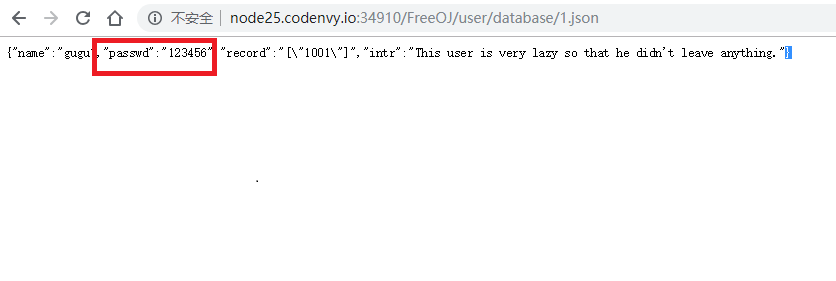
额。。。Day8再修吧。
Day8全部代码下载
首先我们解决Day7留下的Bug。在不改动apache配置的情况下,我们没有办法阻止查看{uid}.json,但是如果将密码加密,就算密文被看到也无法得出密码了。
PHP自带加密函数crypt(),我们采用crypt($passwd,$passwd)进行加密。
直接将libuser.php中所有的 &ndsp;passwd 全部改为 crypt($passwd,$passwd)即可。篇幅有限,请直接看代码。
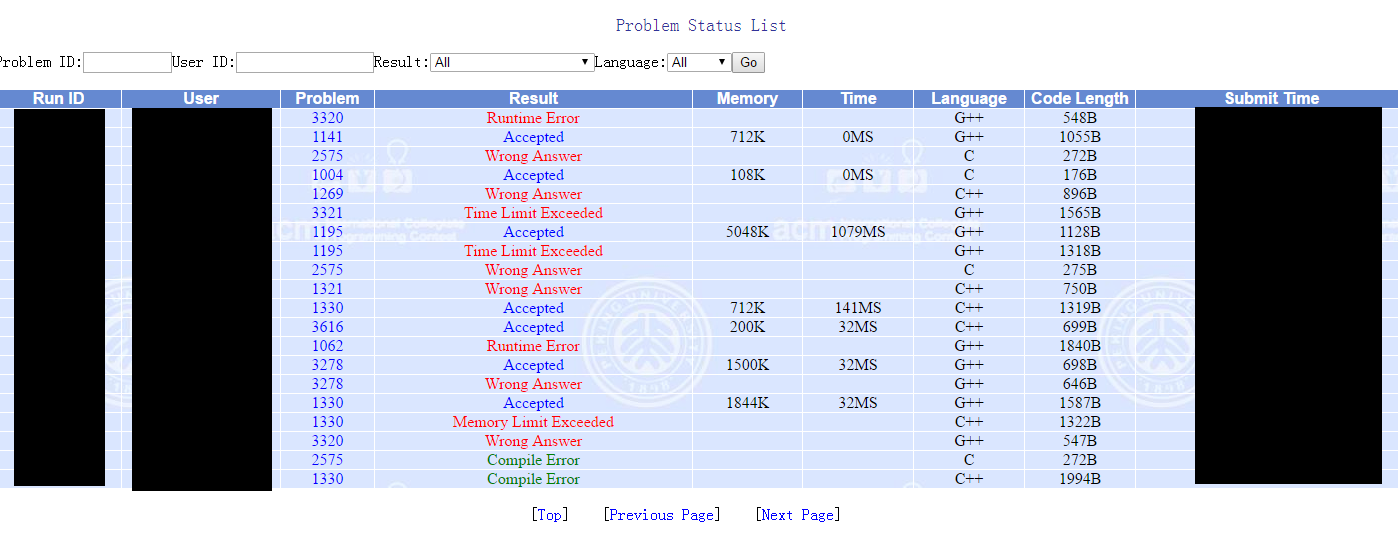
思路:
在评测时创建一个辅助文件,它可能是"Unused","unaccepted","accepted"
若该文件是”unused“,表明未进行评测或评测错误。
若该文件是”unaccepted“,表明评测未通过。
若该文件是”accepted“,表明评测通过。

在status.php被调用时,扫描/submissions下的每一个评测记录,根据以上法则判断评测结果输出。
下面上status.php代码。
<?php
echo "<body><table class=\"table\"><caption>Status</caption>";
echo "<thead><tr><th>Run ID</th><th>Status</th><th>Detail</th></tr></thead><tbody>";
exec("ls -tr ./submissions",$stl);
//"<tr class=\"warning\"><td>All</td><td>CE</td></tr>"
foreach ($stl as $cur){
    //echo $cur . "<br>";
    if (file_exists("./submissions/" . $cur . "/unused"))
        echo "<tr class=\"warning\"><td>" . $cur . "</td><td>Submitting/Judgement Failed</td>" . "<td><a href=\"submissions/" . $cur . "/result.html\">More</a></td></tr>";
    elseif (file_exists("./submissions/" . $cur . "/accepted"))
        echo "<tr class=\"success\"><td>" . $cur . "</td><td>Accepted</td>" . "<td><a href=\"submissions/" . $cur . "/result.html\">More</a></td></tr>";
    elseif (file_exists("./submissions/" . $cur . "/unaccepted"))
        echo "<tr class=\"danger\"><td>" . $cur . "</td><td>Unaccepted</td>" . "<td><a href=\"submissions/" . $cur . "/result.html\">More</a></td></tr>";
    else
        echo "<tr class=\"active\"><td>" . $cur . "</td><td>Judging</td>" . "<td>Detail(unavailable)</td></tr>";
}

echo "</tbody></table></body></html>";
其他文件还需要修改,篇幅原因省略。
到Day8为止,一个OJ的核心就完成了。仅仅14.87KB的代码,甚至比Win7自带的计算器(758KB)还要小!在完成核心之后,我们只需进行一些优化即可。
附:FreeOJ核心下载:这里